·

Whole Foods for Health
plant-based whole foods // livelovesimple.com

plant-based whole foods // livelovesimple.com

plant-based whole foods // livelovesimple.com

As someone who struggled with my weight for the first half of my life, it breaks my heart to see others going through that pain. I was overweight from the time I was twelve-years-old until I was about twenty-two. Then during both of my pregnancies, I suffered from prenatal depression that led to me gaining a bit too much weight during my pregnancies that I kept on for many years because I got trapped in a bad cycle.

All in all, there have been about ten total years of my life where weight was not a struggle for me. The blessing in these clear, separate phases of my life is that I know what works really well and what hurts. I could honestly write a book about physical wellness. I have read countless books, watched countless documentaries and studied every theory that I can get my hands on. But the truth is that it can all really be boiled down to a few simple things:

1. Good emotional/spiritual health is critical for good physical health.
2. A whole food diet is critical for good physical health.
3. Movement is critical for good physical and emotional/spiritual health.

And while these things are “simple” in theory, I realize that there is nothing simple about them in practice. So don’t be overwhelmed. Don’t feel like you are alone. And always, always start with something small and work your way up from there.

I won’t get into all three of these points today. For now, I will talk about the second point and explain what I mean by “a whole food diet” because I do believe that this is a wonderful place for anyone to begin. The more that I learn about nutrition and the more that I consider my own life experiences, the more passionate I become about the importance of whole foods.

If you’re not familiar, whole foods are foods that are unprocessed and unrefined, or processed and refined as little as possible, before being consumed. Meaning that they are taken from the earth and cooked or eaten raw with little or no intervention–nothing added, nothing taken away, nothing chemically altered.

Whole foods typically do not contain any additives. Examples of whole foods include unpolished grains, beans, fruits, vegetables and non-homogenized dairy products. Originally (and naturally) all food is whole food. The term whole foods is often confused with organic food, but whole foods are not necessarily organic, nor are organic foods necessarily whole.

Whole foods are important because a lot of the food on the market today–especially in the United States–is processed with dangerous chemicals, preservatives, salts, artificial sweeteners, and so on. While these artificial substances may taste “good” and may make food cheaper, they are toxic. They cause cancer, obesity, heart disease, and diabetes, just to name a few.

It is naive to believe that the government is protecting us from toxic food. The U.S. is far behind the curve when it comes to food safety and nutrition. The U.S. government allows for a whole variety of dangerous foods to be sold that are actually banned in other countries. Therefore it is our responsibility to take matters into our own hands and make educated decisions about what we eat and what we feed our families.

If there is any one thing that I would recommend to a person looking to improve their health it is this, stick to whole foods and add more fresh produce into your diet. I would also highly encourage you to move toward plant-based, but we’ll save that conversation for another day.

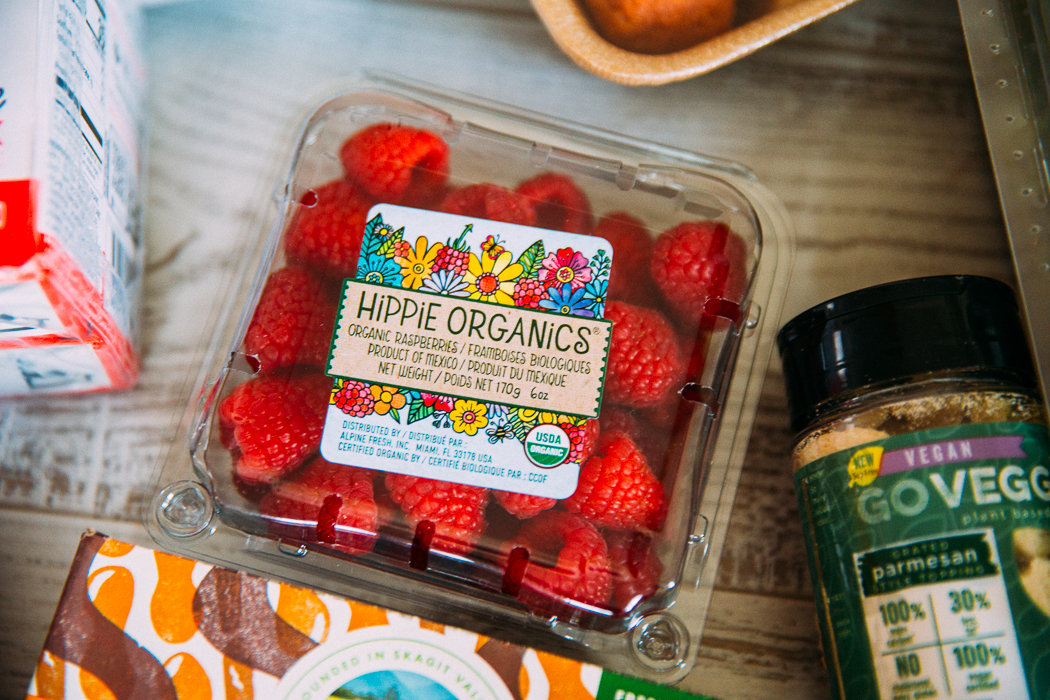
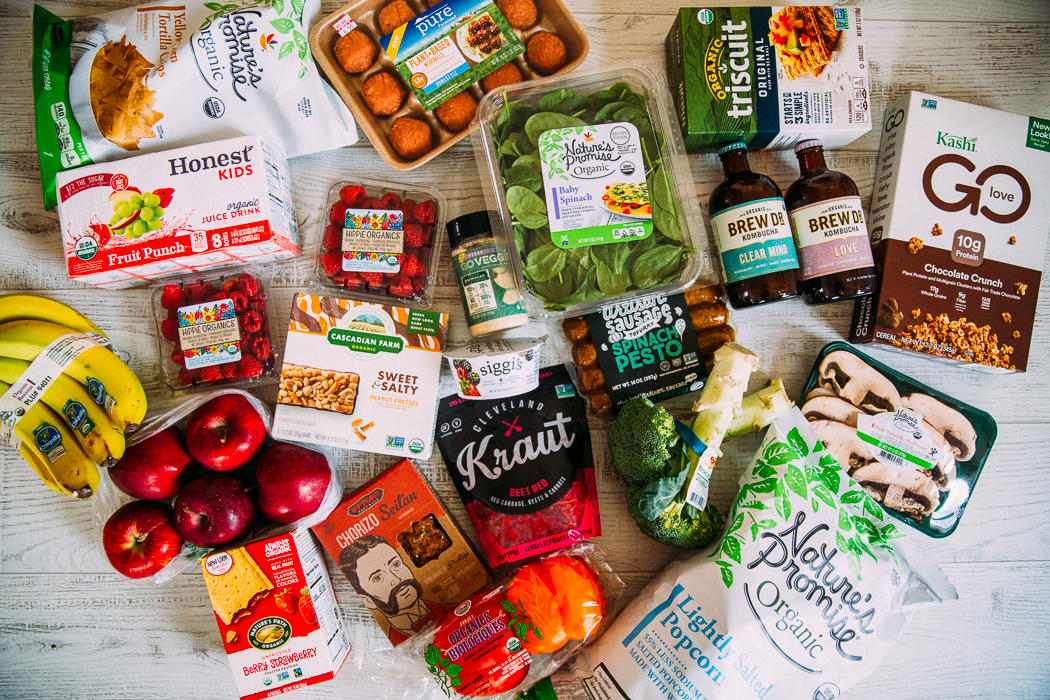
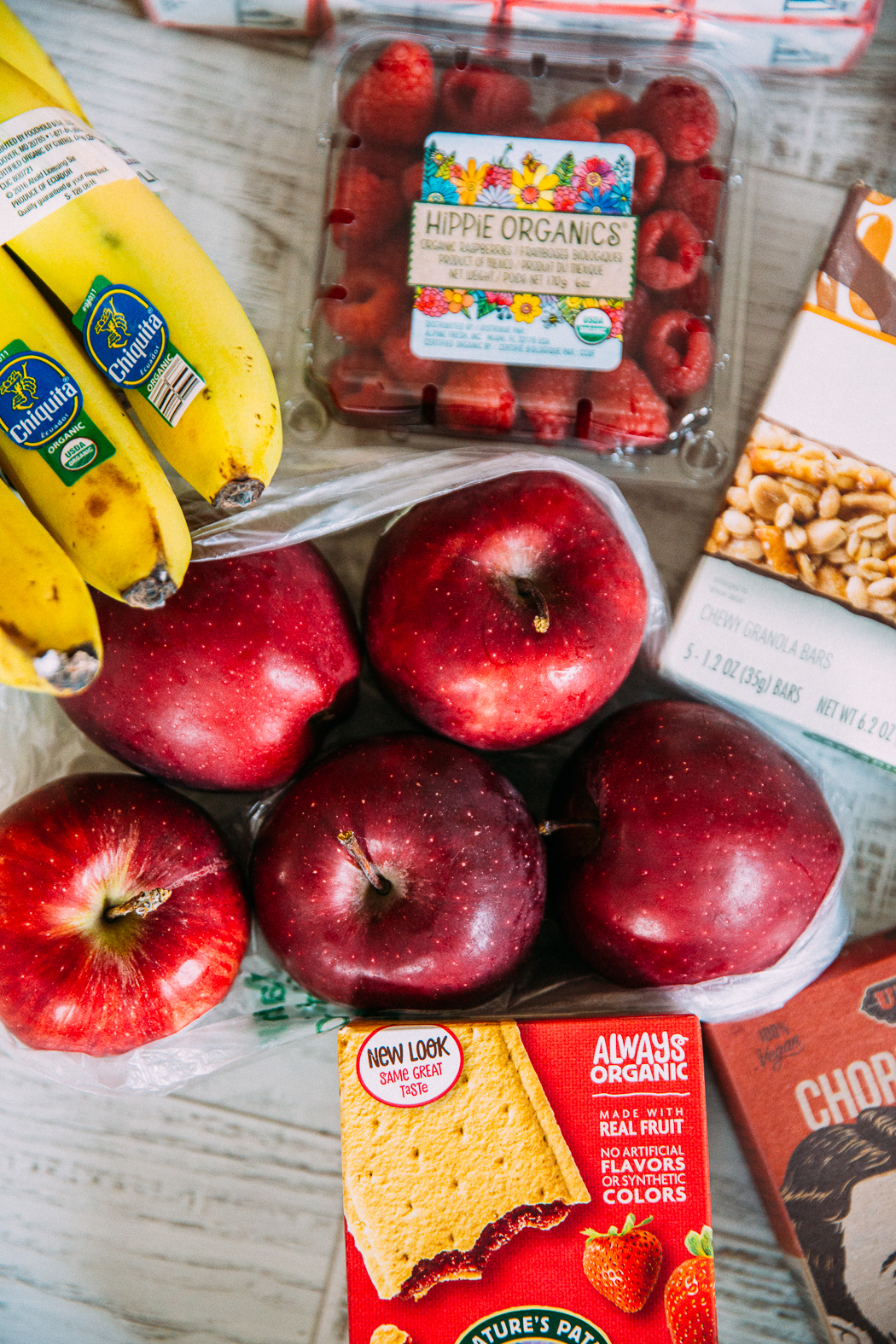
P.S. This is not a sponsored post. I just decided to take a few snaps of our groceries the other day because I’ve been really conscious of shopping for organic, plant-based options lately. I also aim for a lot of whole foods, although as you can see from my grocery haul, it’s not perfect. Processed food (like cereal, crackers, granola bars, etc) are super convenient. My kids are really great about eating fresh fruit and vegetables because they’ve been eating it their whole lives, but when it comes to things like school lunches, I opt for organic versions of their favorites because I don’t want things to end up in the garbage. It’s a work in progress forever. 😉

Oh, and one more thing while we’re on the topic of groceries, check out this post that I made about earth-friendly grocery shopping.

you may also like

  • · · · · · ·

    Review: Tribes by Seth Godin

    On a recent flight, I began reading Seth Godin’s Tribes. On the return flight, I finished it. It was my introduction to Seth Godin—no idea why I hadn’t found him sooner!—and what an introduction it was. The book blew me away. It is the best book on leadership and change management that I’ve ever read. While the content is sure to inspire change of the greatest sort within any organization—from business to church, non-profit to learning institution—it is also of incredible value to individuals.

    In this post I want to share some of my favourite pieces from Tribes as well as some of my own insights.

    Whether you want to create positive change in the world, in the workplace, or simply in your own, I recommend that you read the book for yourself. It is a relatively easy read, spliced up into short, digestible chapters. I got through it in a few hours. But it is absolutely packed with revolutionary ideas, suggestions, and real-life examples of people making a difference and leading tribes in today’s world.

    Many people are starting to realize that they work a lot and that working on stuff they believe in (and making things happen) is much more satisfying then just getting a paycheck and waiting to get fired (or die).

    I’ve begun to think of my generation as the Fight Club generation. Tyler Durden said it best, “We’ve all been raised on television to believe that one day we’d all be millionaires, and movie gods, and rock stars. But we won’t. And we’re slowly learning that fact. And we’re very, very pissed off.” I think Tyler and Seth’s sentiments are one and the same. Our parents (or maybe you) were raised to believe that you needed to grow up, go to school, get a job, and stay there. Work hard, save money, vacation once a year, and retire as soon as possible.

    Well, the Fight Club generation doesn’t want to hear that nonsense. We want gratification now. We don’t want to spend 40 hours a week miserable just so that we can collect a paycheck twice a month. We don’t want to spend half a lifetime at a job that we hate just so we can get fired or die one day! We believe that we can be happy now. We can pursue our passions, make a difference in the world, live out our dreams, and be successful all at once. And… we are right. We can do it. There are people doing it every single day. I love Tribes because it tells the stories of those people and more importantly, how they got there and how we can do it, too.

    Somewhere along the way, perhaps when twenty thousand Ford workers lost their jobs in one day, or when it became clear that soft drink companies were losing all their growth to upstarts, the factory advantage began to fade.

    The reason why the “school-job-suffer-retire” model worked for so long was because it was safe, it was comfortable. Human beings like to feel safe. It feels good to know that you will get a check once every couple weeks. It feels safe to know that you can walk into the office every morning and the lights will turn on and the computer will turn on. The peace of mind in trading your hours for dollars seems worth it when you have to put food on a table and a roof over someone’s head. But, guess what, that model isn’t really proving to be so safe after all.

    The recent tanking of the economy has really shaken things up. People are losing their jobs at rapid rates, unemployment is way up. Ethics have been violated, corruption runs rampant, and people don’t feel safe anymore. We want to take matters into our own hands. We want to create the lives of our dreams and be completely independent. We are doing it every day.

    In unstable times, growth comes from leaders who create change and engage their organizations, instead of from mangers who push their employees to do more for less.

    Now, more than ever, each of us has an opportunity obligation to become a leader, to create change, and to make a positive difference. The ever-evolving world of social media and the Web—Facebook, Twitter, LinkedIn, Wikipedia, Google—give us instant access to an unthinkable quantity of information and resources. When we learn how to leverage those resources we can become unstoppable. When we teach others to leverage those resources our tribes can become unstoppable. It is a great time to be a leader, and it is also the right time.

    Leadership is scarce because few people are willing to go through the discomfort required to lead. This scarcity makes leadership valuable. It’s uncomfortable to propose an idea that might fail. If you’re not uncomfortable in your work as a leader, it’s almost certain you’re not reaching your potential as a leader.

    Change = pain. If there is anything that I have learned over the past three years, it is this. Human beings are creatures of habit. When asked why things are done a certain way, most people will always respond the same way: “Because that’s the way we’ve always done it.” It is safe, it is comfortable. Our profits may be plummeting, our staff may be miserable, our customers may be disgusted—but this is the way we’ve always done it! Don’t try to mess with our traditions! Right? Wrong!

    Success takes dedication, hard work, persistence, and change. Dedication, hard work, and persistence can be painful. Some people are cut out for it and some people aren’t. The people that are, are the leaders. Being a leader is not comfortable and it’s not supposed to be. Being a leader takes character.

    Believe it or not, anyone can do it. “No one is born charismatic. It’s a choice, not a gift” (Tribes).

    Change almost never fails because it’s too early. It almost always fails because it’s too late.

    The time for change is now, my friends. If not now, when? There has never been a time where the need for positive change was more urgent. If you do not realize that this moment is all you have, then you do not have anything. This is it. After this moment, nothing is promised—not tomorrow, not next week, not your 81st birthday. You have this moment and you alone get to decide what you do with it. Yes, you can surf Facebook for a few more hours and stalk out your ex-boyfriend’s life for awhile more. You can also sit on the couch with a six-pack and watch The Jersey Shore marathon on MTV. …But if you asked me, I’d tell you that you’ve got more important things to do. Whether you’ve been waiting to pitch a great idea to your boss, waiting to take a proactive approach to your health, or waiting to embark on that 6 month “vagablogging” journey; stop waiting!

    There is really nothing in your way. There are no problems and no obstacles. Any anxiety that you might have stems from your past or your future; but your past and your future are not real! The only thing that is real is this moment, right now. The past and the future are in your head. No matter what you think is standing in your way, you can find a way around it. If you can’t get on the next flight to Melbourne (to start your career as a kangaroo-catcher) then sit down and figure out how you are going to make it happen. Right now.

    I’m frequently asked about getting credit. People want to know how to be sure they get credit for an idea, especially when they have a boss who wants to steal it. Or they want to know how to be sure to give me credit for an idea in a book or a blog post of their own.

    Real leaders don’t care.

    If it’s about your mission, about spreading faith, about seeing something happen, not only do you not care about credit, you actually want other people to take credit.

    There’s no record of Martin Luther King, Jr., or Gandhi whining about credit. Credit isn’t the point. Change is.

    Stop worrying about the obstacles and start taking action. Stop worrying about who is going to get credit and start making a difference.

    ————————————————————————

    What I loved most about Tribes is that it left me feeling like anything and everything is possible. The book is full of stories about ordinary people who did (and do) extraordinary things every single day. These people don’t let fear stop them. They become leaders and they create & inspire change. Every person is capable of this. You are capable of this! What do you want to do? Are you ready to become a leader? I say yes. Yes you are!

Leave a Reply

Your email address will not be published. Required fields are marked *