Minimalism: How to Declutter Your Home & Your Soul
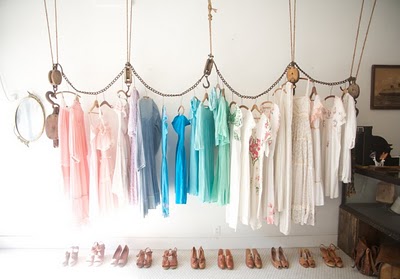
min·i·mal·ism (mĭn’ə-mə-lĭz’əm) n. Use of the fewest and barest essentials or elements, as in the arts, literature, or design.
How Did I Get Here?
My life was moving in the right direction. I was moving toward the life of my dreams, paying down my debts, and getting closer to financial & spiritual freedom; but something wasn’t right. And then it hit me, I was tired of all of the stuff — the clothing, jewelry, gadgets, art, collectibles, and all of the other crap that I just didn’t need.
I had spent my entire life accumulating things because I thought that my possessions said something about me. I thought that I needed those things to remember the magic of my journeys, to prove that they had happened, and to justify my existence. I was dead wrong.
The important things in life should exist imprinted on my heart & soul alone. These things can not be held in the hands. I am not defined by my possessions. It is an injustice to my soul to define myself by material objects.
Over the past year, I have begun to adopt a minimalist lifestyle.
Why Minimalism?
Excessive material possessions have enormous negative impacts on our bodies & souls. Severe clutter can impact your physical health. (Think fire escapes and hygiene issues.) Even mild clutter can impact your mental & spiritual health. Minimalism is the path to counteracting these negatives.
Clarity of mind. Clutter can destroy your subconscious. Imagine you sit down to work but you can not concentrate. You wonder why you are so distracted. You feel energized, prepared to work, and excited about your task. However, you just keep getting distracted. You can not focus. There is a chaos in your head that you can not explain. You look around you and find yourself surrounded by clutter.
Even if you did not consciously acknowledge the clutter around you, it impacted your mind. Your mind is constantly absorbing your environment. It picks up on millions of details that do not even register with you consciously.
It is necessary to be in a calm, clean environment to experience clarity of mind. That means less clutter, less noise, and no other distractions (like music, television, Twitter, Facebook, etc.)
This principle applies to all living things. Why do you think that racehorse trainers place blinders on horses? These keep the horse focused on what is in front of him, encouraging him to pay attention to the race rather than other distractions, such as crowds. Additionally, blinders are commonly seen on driving horses, to keep them from being distracted or spooked, especially on crowded city streets. The same goes for you! If you do not have on blinders (a distraction-free environment) you will not experience clarity of mind.
Physical health. Clarity of mind will lead to tranquility. Tranquility will lower your blood pressure and stress level. Less stress means less illness, lower risk of ulcers, heart disease, and even common colds.
Productivity. Clutter is a distraction. Whether you are thinking of picking it up, dreading picking it up, avoiding picking it up, or actually picking it up — you are wasting valuable time with which you could be doing something productive.
Self-realization. When you hold your possessions so dear, you lose track of yourself. Whether it is a necklace, a sports car, a stamp collection, a lucky rabbit’s foot, or a pair of shoes — it is dangerous to rely on a material object for your happiness. Material objects are physical things and as such are subject to all sorts of tragedy — getting lost, destroyed, or stolen — to name a few.
The truth is that a material object is only as valuable as the value that you place on it. Sure, certain things will hold more sentimental value than others. If you inherit your great-grandmother’s wedding ring, for example, it will mean a lot to you. But if that ring gets destroyed in a freak forest fire, you will go on. The memory of your great-grandmother will live on and you will continue to honor her spirit — ring or no ring.
We must let go of our attachments to material things. We are not those things. Like Tyler Durden says, “You are not your job, you’re not how much money you have in the bank, you’re not the car you drive, you’re not the contents of your wallet, you’re not your fuc*ing khackis.”
As you begin to eliminate your excessive material possessions, you will be forced to come face-to-face with your true self. You will no longer be able to hide behind the facade of your “things.” You will be revealed as you truly are. This will be a wonderful moment of self-realization.
Only when you see yourself as you truly are, at your core, can you begin to become the person that you want to be.
Purpose. The acquisition of material things is a never-ending quest for emptiness. You will spend your life in pursuit of material objects. You will work until you finally have a diamond ring. Then you will want a Porsche. You will work until you have a Porsche. Then you will want a mansion. You will work until you have a mansion. Then you will want an island. It will go on this way until one day, your life will have passed you by. You will be old and you will look back on your life to think, “What have I accomplished?” You will be surrounded by things but on the inside, will you truly be fulfilled? The story of The Fisherman and the Businessman illustrates this point perfectly. (Watch the video if you don’t feel like reading through it.)
Intention. Minimalism will help you to live consciously. You will find that the principles of minimalism line up nicely with those of conscious living.
Conservation. There’s a lot we can learn from traditional cultures such as the Native Americans. Including the idea of walking lightly upon this earth. It’s something we’ve forgotten in hundreds of years of striving to achieve more, to produce more, to build bigger and better things.
We have forgotten to walk lightly, and instead mine the earth of its natural resources, clear-cut forests, pollute rivers and lakes and oceans, alter the landscape to fit our needs, make the air dirty and the rain acidic and the ozone holed.
This isn’t news. We’re all aware of the problems, but the solutions are less obvious. Do I buy greener products? Do I buy a greener car? Do I recycle all the stuff I use? Well, sure. You can do all of those things, and they are useful. But even better: live a life of less, and walk lighter.
How To Get There
Getting rid of your personal belongings isn’t easy. Many of us are hard-wired to keep things for fear that we may need them “someday.” Here’s a little hint friends, someday rarely comes. (And if it does, it usually doesn’t come until you’ve thrown the stuff out anyway.)
Up until recently, I kept everything. From old magazines, to half burned candles, to childhood toys, to five-year-old day planners — I kept it all. Slowly but surely, however, I’ve been getting rid of the junk. The useless items get thrown in the trash/recycled and the rest gets sold/donated.
Some items have been harder to part with than others. I had an infamously (and embarrassingly) large jewelry collection. I’ve traveled quite a bit and made sure to purchase a piece of jewelry at each destination. The most difficult pieces to part with have been my necklaces from Kenya (actually I’ve yet to part with them). But it is getting easier. I’ve parted ways with many of my favorite pieces and with each one, I feel more liberated & closer to my true self.
Here are some quick & easy tips to declutter in no time:
1. Room by room. Apply the following steps to each room in your house, one at a time. Don’t attempt to do more than a room each week. The process can easily become overwhelming, so pace yourself.
2. Piles. Use piles to sort everything out. Create 3 piles: Keep, Sell/Donate, and Trash. After you’ve sorted, trash or recycle the items in the Trash pile immediately. Don’t waste time or give yourself an opportunity to change your mind. Then reevaluate the Keep and Sell/Donate piles. Are there any items in the Keep pile that you really should donate or sell? If so, move them to the appropriate pile.
3. The 3 Month Rule. Use The 3 Month Rule to add even more items to your trash/sell/donate piles. Ask yourself if you use each item at least every 3 months. If you do not, then you really should not be hanging on to it.
4. Google. Have a quick search for “De-clutter Tips” or “How to Live a Minimalist Lifestyle.” You’ll come up with tons of great resources & then you can really get to work. I did it and found this great post: 5 Creative Ways to Upsize Your Life by Downsizing. I love these creative ideas, especially the Reverse Birthday Party!
5. Have fun. Enjoy the process. Remember that sometimes the journey is just as important as the destination itself. If it gets hard, focus on the end result. You are creating the life of your dreams. Your dream life has to be about your passion, your core values, and the real you. Get rid of the junk & cut the fat!
Get to Work
Minimalism has been an incredible journey for me already and I am not even close to where I want to be yet! My personal goal is to pare all of my possessions down until I can carry all of my belongings in one or two suitcases. Believe me, it is a lofty goal for a former hoarder; but I am determined to meet the challenge. I can not wait to see where I am in a year’s time.
So what about you? What are your goals? Do you have any creative tips or ideas for junk-free living? I’d love to hear your thoughts in the comments. Good luck on your path!



Love your viewpoint and trend to a minimalist lifestyle.
@Booking – Thank you so much. I'm really glad you enjoyed it. Have a great night!
Dena, you rock for writing this! I've been thinking of this REALLY hard lately and I want to get rid of almost everything! I feel like I need so little and that having extra around me is just holding me back.
I'm really intimidated by where to start. I don't hoard, but taking the first steps is always the hardest part for me.
Where are you at on your taks list?
I love the idea of deleting stuff to sharpen our focus (the racing horse example). My new roommate and I decided to do it and in the end my room will have almost nothing more than a desk/chair, bed, shirt rack, cat toilet, and a bookshelf. When the iPad/Kindle reaches Asia (I live in Taiwan) even the bookshelf might be gone. Cannot wait…
@JR – Wow, thank you! You know we are absolutely on the same wavelength. Het rid of it all. All of the excess really does hold us back.
So far I've made some great progress but I've still aways to go. I'd say I am about 50-60% purged. 😉 Good luck with your cleansing & let me know what I can do to help.
@Isao – That is absolutely inspirational. It would be really great to see your before & after pictures! Best of luck with the purging.
You are right on point, clearing the clutter will sharpen the focus. Thanks for the great comment.
this article is epic.
Thank you for taking your time to explain minimalism in detail. This is an article I would link to someone if they ask me “what is minimalism about?”
I am so glad that you enjoyed this post. Minimalism has been an enormous part of my life over the past year. The benefits are truly remarkable. I would encourage anyone to seek out this lifestyle. It is a truly worthwhile endeavor.
I can totally relate to keeping things… I used to keep 1/2 burnt candles from my teen years when I was obsessed with them! But I’ve been getting so much better as I get older… It’s so freeing to give things away. I much prefer it now!
That is a great way to describe it, “freeing”. Exactly, letting go of material things is liberating! It brings us closer to our true selves, and takes us one step further from the mask that material things covers us with. Thanks so much for the comment, Karen.
That feeling of freedom you touch on in other ways is what minimalism is all about. Little stress if any breeds success and happiness.
For those who are interested in minimalism, come check out my new eBook PROJECT M-31: Simplify Your Life in 31 Days http://theminimalistpath.com/project-m-31-simplify-your-life-in-31-days/
David Damron
The Minimalist Path
Thanks so much, Dave. I also want to note to evolution you readers that I highly recommend Dave’s work. He is a Minimalist Master!
These are excellent tips to decluttering. I love the “Clarity of Mind” concept – its so true! Now is the perfect time to donate stuff before the end of the year – its tax deductible! Great blog!
Here is some additional information about getting deductions and the process:
http://www.getoffthiswheel.com/2010/11/16/donate-your-stuff/
I’ve been trying to live for some time (ca. 15 months) by my own idea of minimalism and decided to take my way of living to the next level by looking up things. That’s how I found this site and I really enjoyed reading your experiences. I also have my plans for the future, I’m moving to an apartment with 2 other flatmates this fall to put myself to the test. Up until now probably my greatest achivement was that I managed to sell my car and commute exclusively by bike. (I’m having recurring health issues due to the shitty weather here, but I don’t plan on giving up…) I feel like I’m growing twofold in spirit as I throw away my worldly stuff, and I feel independent and relieved.
Good luck and wish u the same feeling!
Cheers from Hungary
@ Rowley – Wow! Your story is amazing. I am so happy to hear that you are embracing a minimalist lifestyle — and more, that you are growing in spirit as you throw away the worldly stuff and become closer to your true self. This is great news. 🙂 Please keep in touch & let me know how your journey progresses.
I wish I saw these posts years ago. I love them. This post made me think of anything that i have in my house that has dust on it, probably can be sold or given away. New rule of thumb, if you have to dust it, then you should probably get rid of it.
I have just started the process of reducing my possessions. I really enjoyed reading this and I noticed that it is around a year since you wrote this so I am interested to know how you are now getting on.
Hi Racheal! Thank you so much for stopping by. I’m glad to hear that you are embarking on your own journey toward fewer possessions — and hopefully greater (physical, spiritual, mental) clarity. You are right it has been a year. I actually did make a post on this topic in June. You can check it out here: http://evolutionyou.net/minimalism-get-rid-of-clutter/ 🙂
Wow. Great photos and wonderful insight into all aspects of living a minimalist lifestyle and what it means.
Mark
http://www.minimalistlifestyle.wordpress.com
I’m getting ready to post something similar on my blog. After having all my belongings in storage for the last year, I unpacked 15-20 boxes of “stuff” and wondered what the heck it was all for. I have a huge sell/donate pile that I’m working through right now.
Happy I found your blog today. 🙂
That is amazing, LC! Good luck with the sell/donate process.
Through the 26 years of my life, I grew up and have been surrounded by materialistic possessions, as I was brought up in a wealthy family. I realized that not only clutter, but even as far as being a hoarder, it was time to let go of things.
I just started 2 months ago but I’ve still a long way to go. I’ve been distracted in my journey many times, just fed up with the stress of seeing all these things and the difficulty of letting them go.
Reading your blog/article has inspired me to continue and really finish this job.
I think what keeps me on track is knowing what I’m going to keep in the end.
(my records, speakers, and my instruments.) everything can go.
As long as I keep my mind on that, the wheel will never stop turning till that day of freedom.
I downsized a lot and I was pretty happy about it. But then I moved and I got new friends that are very into fashion and for some reason I have bought so much cloths. Now I feel pretty bad about that.. I have clutter again and I want to downsize. Im so tempted to buy cloths and makeup and feel I need that to be pretty. I dont want to feel that way though. Do you have any advice?
I spent my first 12 years with my hoarding great-great
grandmother. She was the epitome of those featured on the show of the same
name. Spent those years in an eight bedroom house; however, we had to sleep in
the living room because each bedroom was literally filled to the ceiling with
stuffs! Since then, I have battled with having order in my immediate surroundings.
There was just always mess everywhere.
Finally as I got into my early 20’s, I began conquering this
problem on a small scale then it grew large. I wanted more peace of mind, more
time to living and more money in my pockets. I had begun to fall in debt and I
was in search of a way to correct this problem. A mentor of mines always said “There’s
never a shortage of money, there’s only a shortage of ideas”. I pondered over
that for almost a year. I finally figured it out and began stripping away the
excess. The things I did I still can’t believe I was able to do: Sold both my
55” and 60” inch TVs in Feb ‘11; Moved from an apartment that ran about 1600 with
utilities to a room for a quarter of that in March ‘11; sold my car in April
2011; and got rid of a lot of clutter as well.
Now I have a bit of anxiety because it’s time to move again.
I have acquired a few more things than intended. I’m still without cars and televisions,
it’s just small stuff, but the weight of it on my mind is heavy. I’ll overcome
it, but who knew that objects, stuff, could cause one so much grief?
This is a must read information. Must admit that this is one of the best guides I’ve ever read. Thank you for sharing.
Thank you for reading! xo
Thanks for sharing this informative post, i really love reading your article .