No Alcohol November: The Results
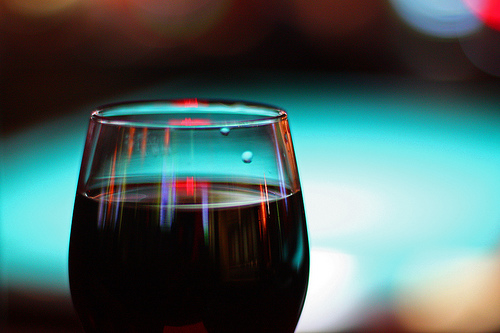
Last month, I embarked on a No Alcohol November Challenge. My reasons for starting the challenge were not perfectly clear. I said that I wanted to experience all of the things that people report after giving up alcohol—optimized health, weight loss, increased focus, motivation, and energy.
But if I am going to be honest, the truth is, I did it because I knew that there was “something” not right about my drinking habits. Like I said in that post, I am an adult and I should be able to have a glass of wine with dinner and be satisfied with that—not craving three (or four or five) more.
Before I get to the heart of this post, I want to put it all out on the table. I did have alcohol in November. Before the challenge started, I’d made an exception for Thanksgiving. I also had two Groupons which I’d already paid for and were set to expire in November. So I used them and had the wine that was included with those activities (a wine tasting [which consisted of a lot less wine than you’d ever think!] and dinner for two plus dessert & wine at The Melting Pot). That said, I had alcohol three times last month. There was one more, but I’ll write about that later.
The Good. Once I accepted that the main reason I’d started the challenge was because I knew that there was “something” not right about my drinking habits, I was on a mission to discover what the problem was. I thought it would be hard to discover, like some deeply hidden secret, but it really wasn’t. The problem presented itself right away.
The first week of the challenge was simple. I had no problem giving up my glasses(es) of wine on the weeknights. Monday – Wednesday went by painlessly. Then Thursday came. Thursday and Friday nights are typically my drinking nights. No matter what happens during the week, I usually drink Thursday and Friday. Usually I have a few glasses of wine or a few beers (sometimes more).
When I left work on Thursday I had a strong desire to stop at the liquor store on my way home. My mind started to make excuses for my burning desire. I need to relax. I need to unwind. I deserve a bit of relaxation after the week I’ve had.
I was stronger than the urge.
Then Friday night came and it got harder. On that day, I got some very stressful news from a family member. Then, Matthew told me that he would be going out with some classmates for the evening and would be home late. There I was, alone and stressed out. It was the perfect storm. Coincidentally we also had a refrigerator full of beer.
It was really hard. I felt weak. I thought about the stressful news that my family member had shared with me. My mind started to play tricks. I tried to convince myself that I needed to have a drink. It so happened that a friend wrote me an email then. It came at just the right time. I started to craft my response to him and everything started to pour out of me. The stress that I was feeling; the craving for a drink (or a lot of drinks).
And as the words poured from my fingertips, clarity struck. I could see through all of it. There had been a pattern, a pattern for all of my life. Most of my stress comes from worry and more often than not, that worry has to do with someone else. That’s it. It was as if a clear, bright light was shining through the darkness. I drink to numb my pain. I am in pain because I am worried about other people.
I decided not to have a drink then. I got what I had been looking for. I found my clarity. I seized the opportunity and rather than turning to the bottle, I turned to meditation. I finished the email to my friend and then turned off all distractions and sat cross-legged on my living room floor. I closed my eyes and meditated.
I am incredibly proud to say that after that moment, things got easier. My cravings lessened. I started to notice some of the positive changes I had hoped for. My face really did start to look better, less puffy. I felt a sense of clarity and increased focus. I felt that I no longer needed alcohol. Stress would come and I would handle it in productive, meaningful ways. I would meditate or exercise or write it out.
I felt like I had succeeded.
The Bad, and The Ugly. What comes next is crushing. It’s hard to write. After all of it, I had made it through November. My “cheat” days weren’t awful, I practiced moderation. Everything was right. And then I let my guard down… on the very last day of November.
I was at a conference. Conferences are wonderful. I always learn a lot and meet cool people. But there’s a dangerous trap for people like me, who like to drink too much—cocktail hour and an open bar disguised as a networking event. I was sleep deprived. I am an awkward network-er. I don’t have the social graces that many of my friends and colleagues seem to exude. So the night followed the path that too many nights have followed for me.
I made an exception. It was, after all, just a few hours away from December. I had one glass of wine. And that one turned to two and two to three. Until eventually, I lost count, but I’d guess it ended up around six.
Stress and worry are triggers for me. I had acknowledged that. But I completely forgot about the other one—awkward social situations. And there you have it. With only a few hours left in the month, I epically failed my No Alcohol November Challenge.
The Future. This morning I was meditating about what happened, as I’ve been doing every day since that fateful evening. Something struck me, something terribly important and profound: It is not our mistakes that define us, but what we learn from them. And the truth is, as bad and ashamed as I feel about what happened, I know that it had to happen. This is how we learn. We learn by falling down. We get stronger by picking ourselves up.
My challenge is over. On Friday night I went to dinner with a friend and I enjoyed a delicious glass of Sam Adam’s Cherry Wheat beer over dinner, one glass. My relationship with alcohol is forever changed as a result of this challenge. Perhaps I will redefine these rules in the future, but right now I have reached a resolution.
- Week day drinking is no longer acceptable.
- When I am at home, I will limit myself to two drinks total. Perhaps a couple of beers around our fire or a couple of glasses of wine with dinner.
- At special social events and family gatherings, I will limit myself to two or three drinks (depending on the length of time I am out).
- Within these rules, I will only drink alcohol two or three times per month, maybe less.
When I started the challenge, I shared that many people in my family suffer from alcoholism. I said that I definitely wouldn’t go as far as to say that I am an alcoholic (although if I am being honest, the thought has crossed my mind). I am still not certain where I fall on the spectrum. These rules are a good place to start. If I can follow them, that will be acceptable. If I can not, it is time to reevaluate once again.
At the aforementioned cocktail hour, a man came up to me. I’ve known him professionally for a couple of years. He told me that he is a fan of my blog. I was flattered. He also had a question. He asked, “Aren’t you afraid to post such deeply personal things? Aren’t you afraid that it could affect your career?”
I thought for a second before I answered. Then I said, “Well, yes, I suppose that thought has crossed my mind. When it does, I ask myself this question: What matters more to me? Sharing my truths, inspiring my tribe, and growing as an individual OR censoring myself for fear that some potential future employer may judge me for my honesty?” I didn’t have to say anything after that. My choice is clear.
This story is definitely to be continued. I promise an update at the end of December/beginning of January.
In love & light,
Dena
P.S. My first book is up for sale! Click here to grab your copy now. ♥
I did “Dry July” and found it very cathartic. I also had the slip up and learned my lesson. Now when I go our, forgetting that I dont like to drink too much, I am reminded of how much better I feel sticking to one drink and then fruit juice thereafter. I dont go out much and occasionally we will have a bottle of wine in the house, and I like it that way and so does my body and mind!
That’s so good to hear. It sounds like your relationship with alcohol has permanently changed. I am hoping for the same. Actually, I am confident that the same will happen for me. This is one of the things that I love about blogging. My level of accountability is so much greater. I know that my body and my mind are going to love these changes, too.
I have a lot of potential challenges (that could result in slip-ups) on the horizon. December is chock full of those. I look forward to testing my strength of will and coming out victorious. <3
The good news is that you know yourself better now than before and that you know life is more or less about learning about yourself. I have always found that it’s better not to have hard and fast rules about most things, why set ourselves up for a perceived failure caused by our own “rule making”?
I believe in applying the moderation rule, all things in moderation. I decided many years ago that I did not want to drink hard liquor as it isn’t all that good for you, even in moderation. However, I have no problem with having some margarita once or twice a year when visiting someplace like Jimmy Buffett’s.
I usually have a glass of red wine every evening with dinner and may have 2 glasses if we’re out for a special occasion. I might have one beer a month after mowing the lawn and treat myself to a nice cool one.
Do I have rules about these? Nope, not really, I think the number one rule for me is to do things that are healthy in general and not worry about the little things.
If doing rules and challenges help you through the rough spots, then by all means make those rules. As you grow more confident in yourself and your ability to trust your judgement, you will be able to kick those rules to the curb as you will know the best thing for yourself on a daily basis.
Take care.
Thank you, Lou! You are such an inspiration. If I had your strength of will I would not need to set challenges for myself. It still amazes me how you get up every morning at 3:30 am, workout, and still have the energy to do all of the good things that you do on a daily basis! I aspire to one day have your discipline (or maybe something close to it!). Thank you for inspiring me. <3
I am so proud of you Dena!! You are allowed to have slip up’s because you are human. I’m impressed you had so few. I drink frequently and I can only imagine how hard it was! You have inspired me. I gave up alcohol for 40 days once for this health challenge I did. It changed my views on drinking but has time passed I got back to my old ways… Stay with it! I see transformation coming your way!
Aw, thank you so much, Meg! I’ve really been put to the test this week as I’ve attended TWO evening holiday parties (one was open bar!!). The excellent news is that I passed the test with flying colors having no more than 2 drinks at either party.
And what’s better is that I didn’t even WANT to. I know that my relationship with alcohol has changed. Now to make it a LASTING change. ;]
Dear Dena,
I love your honesty – it always inspires honesty within myself.
I don’t think you should be so hard on yourself. That you slipped up a couple of times is okay – you are human after all. The most important thing in this life is that we learn. And I truly believe that we learn best from the mistakes we make, they make us grow.
Keep going and don’t fight yourself. You are a truly wonderful woman!
Lots of love, Kathy
Thanks, Kathy! I’ve really been put to the test this week
as I’ve attended TWO evening holiday parties (one was open bar!!). The
excellent news is that I passed the test with flying colors having no
more than 2 drinks at either party.
And what’s better is that I
didn’t even WANT to. I know that my relationship with alcohol has
changed. Now to make it a LASTING change. ;]
I love this post. I’m trying to do the same thing and I think I drink for the same reasons (worry/anxiety/to unwind).
Thanks, Clare! Things have been going so well since the end of the challenge. I feel like I learned so much & I feel deeply changed. I will work to make sure that this positive shift remains. xo
Dena, I love this post. It is written with such honesty and grace, about a topic that I know is dear to your heart. Thank you for posting challenges for yourself and never being afraid to share the results. I admire you.
Thanks, Kristin. And thank you for understanding the whole story.