· ·

Taking a Break from Facebook | Part 2
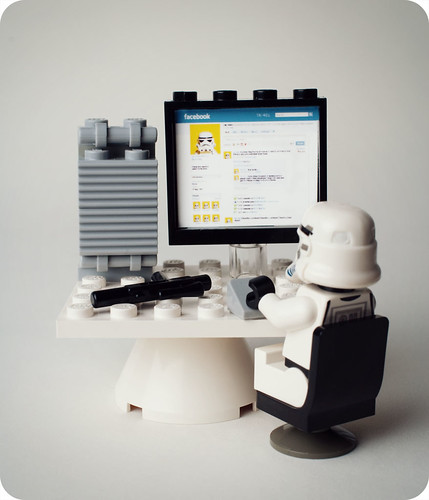
Taking a Break from Facebook was the first entry that I wrote here at Evolution. Back then, I was still at the very beginning stages of creating this blog. It seems like forever ago (though it’s only been six months). When I wrote that entry, I really was taking a break from Facebook. At that time, I decided to spend less of my time prowling the dark alleys of Facebook and shift my focus to other social networking sites (like Twitter) and create this blog. What a great decision!

I knew that taking a break from Facebook was going to increase my productivity, but I never imagined that it would lead me on a journey to creating a blog, making incredible connections, and falling head over heels in love with my new life as a part-time blogger.

Since then, I have gotten back on Facebook, but I no longer feel the addiction to it that I once did. No more incessant desires to check my “Live Feed” every half hour, and no more dramatic impulse to “Like” or “Comment” on every single “Status Update” that I read.

Don’t get me wrong, I like Faceook. I’ve been using it since 2005. It has a lot of redeeming qualities. It’s nice to keep in touch with my cousin in Hawaii and my good friends in the UK. I love to see the beautiful photographs that my friends and family post. It’s wonderful to know what’s going on in everyone’s life at the click of the mouse…

On the other hand, it’s a bit disconcerting when I get “Friend Requests” from the check out clerk of the grocery store that I’ve been in once and the woman that delivered mail to my house when I was five-years-old! Aside from the outrageous friend requests, I’ve recently heard several stories about people becoming serisouly addicted to the social networking site. I’ve even heard about Facebook addiction support groups and therapists offering Facebook addiction counseling.

I see a trend here and it’s not a good one. The internet has long been blamed for many things – childhood obesity, extramarital affairs, identity theft and much more. Facebook, and similar social networking sites, could worsen the problem; but only if we let it. With a bit of common sense and a willingness to exhibit some restraint, we can all reap the positive benefits of social media – like networking, community building, and keeping in touch with loved ones – and at the same time, still maintain our sanity & productivity.

How To Take a Break From Facebook (And Control Yourself When You Return):

1. Step away. The first thing you’ll want to do is literally step away from Facebook for awhile. Without going in to much detail, make a simple status update about your departure.

Sample: I will be away from Facebook for a little while. Try not to miss me too much. If you need me shoot me an email at denabotbyl@gmail.com.

Keep it short & sweet and leave people with a way to contact you (since most have long-forgotten how to use a telephone).

2. Limit your intake. After the detox, you should feel fresh & lighter. You are ready to step back in with a new perspective. Each time you go to log on, take a moment to decide how long you’ll spend. Will you take 5 minutes to sort through messages & reply to comments? Or do you intend to spend a half hour catching up on things? Either way is fine, but set a finite amount of time and stick to it! The point here is to be conscious of your actions.

3. Take inventory of what matters. Now that you’ve got a better handle on the situation, decide whether or not there are other issues at play. Are you spending so much time on Facebook because you haven’t got better things to do? Perhaps you need to take up a new hobby. Join a knitting club, take up jogging, buy a cookbook & start trying new recipes. It’s not to say that you shouldn’t be on Facebook at all, but in the same token, it shouldn’t be the highlight of your day.

4. Enjoy Facebook in a healthy way. Stay connected, spread love & light. Don’t get sucked into the madness. Facebook is not the real world. Like all things, moderation is key.

—————————————

When you do consciously decide to spend your valuable time on Facebook, make sure you are doing something productive that will enrich your life. Never forget how valuable your time truly is. Use Facebook to strengthen your relationships, support causes that move you, share art, and learn. Feel free to join the Evolution Facebook Fan Page at http://facebook.com/evolutionblog.

photo credit

you may also like

  • · · · · · ·

    Review: Tribes by Seth Godin

    On a recent flight, I began reading Seth Godin’s Tribes. On the return flight, I finished it. It was my introduction to Seth Godin—no idea why I hadn’t found him sooner!—and what an introduction it was. The book blew me away. It is the best book on leadership and change management that I’ve ever read. While the content is sure to inspire change of the greatest sort within any organization—from business to church, non-profit to learning institution—it is also of incredible value to individuals.

    In this post I want to share some of my favourite pieces from Tribes as well as some of my own insights.

    Whether you want to create positive change in the world, in the workplace, or simply in your own, I recommend that you read the book for yourself. It is a relatively easy read, spliced up into short, digestible chapters. I got through it in a few hours. But it is absolutely packed with revolutionary ideas, suggestions, and real-life examples of people making a difference and leading tribes in today’s world.

    Many people are starting to realize that they work a lot and that working on stuff they believe in (and making things happen) is much more satisfying then just getting a paycheck and waiting to get fired (or die).

    I’ve begun to think of my generation as the Fight Club generation. Tyler Durden said it best, “We’ve all been raised on television to believe that one day we’d all be millionaires, and movie gods, and rock stars. But we won’t. And we’re slowly learning that fact. And we’re very, very pissed off.” I think Tyler and Seth’s sentiments are one and the same. Our parents (or maybe you) were raised to believe that you needed to grow up, go to school, get a job, and stay there. Work hard, save money, vacation once a year, and retire as soon as possible.

    Well, the Fight Club generation doesn’t want to hear that nonsense. We want gratification now. We don’t want to spend 40 hours a week miserable just so that we can collect a paycheck twice a month. We don’t want to spend half a lifetime at a job that we hate just so we can get fired or die one day! We believe that we can be happy now. We can pursue our passions, make a difference in the world, live out our dreams, and be successful all at once. And… we are right. We can do it. There are people doing it every single day. I love Tribes because it tells the stories of those people and more importantly, how they got there and how we can do it, too.

    Somewhere along the way, perhaps when twenty thousand Ford workers lost their jobs in one day, or when it became clear that soft drink companies were losing all their growth to upstarts, the factory advantage began to fade.

    The reason why the “school-job-suffer-retire” model worked for so long was because it was safe, it was comfortable. Human beings like to feel safe. It feels good to know that you will get a check once every couple weeks. It feels safe to know that you can walk into the office every morning and the lights will turn on and the computer will turn on. The peace of mind in trading your hours for dollars seems worth it when you have to put food on a table and a roof over someone’s head. But, guess what, that model isn’t really proving to be so safe after all.

    The recent tanking of the economy has really shaken things up. People are losing their jobs at rapid rates, unemployment is way up. Ethics have been violated, corruption runs rampant, and people don’t feel safe anymore. We want to take matters into our own hands. We want to create the lives of our dreams and be completely independent. We are doing it every day.

    In unstable times, growth comes from leaders who create change and engage their organizations, instead of from mangers who push their employees to do more for less.

    Now, more than ever, each of us has an opportunity obligation to become a leader, to create change, and to make a positive difference. The ever-evolving world of social media and the Web—Facebook, Twitter, LinkedIn, Wikipedia, Google—give us instant access to an unthinkable quantity of information and resources. When we learn how to leverage those resources we can become unstoppable. When we teach others to leverage those resources our tribes can become unstoppable. It is a great time to be a leader, and it is also the right time.

    Leadership is scarce because few people are willing to go through the discomfort required to lead. This scarcity makes leadership valuable. It’s uncomfortable to propose an idea that might fail. If you’re not uncomfortable in your work as a leader, it’s almost certain you’re not reaching your potential as a leader.

    Change = pain. If there is anything that I have learned over the past three years, it is this. Human beings are creatures of habit. When asked why things are done a certain way, most people will always respond the same way: “Because that’s the way we’ve always done it.” It is safe, it is comfortable. Our profits may be plummeting, our staff may be miserable, our customers may be disgusted—but this is the way we’ve always done it! Don’t try to mess with our traditions! Right? Wrong!

    Success takes dedication, hard work, persistence, and change. Dedication, hard work, and persistence can be painful. Some people are cut out for it and some people aren’t. The people that are, are the leaders. Being a leader is not comfortable and it’s not supposed to be. Being a leader takes character.

    Believe it or not, anyone can do it. “No one is born charismatic. It’s a choice, not a gift” (Tribes).

    Change almost never fails because it’s too early. It almost always fails because it’s too late.

    The time for change is now, my friends. If not now, when? There has never been a time where the need for positive change was more urgent. If you do not realize that this moment is all you have, then you do not have anything. This is it. After this moment, nothing is promised—not tomorrow, not next week, not your 81st birthday. You have this moment and you alone get to decide what you do with it. Yes, you can surf Facebook for a few more hours and stalk out your ex-boyfriend’s life for awhile more. You can also sit on the couch with a six-pack and watch The Jersey Shore marathon on MTV. …But if you asked me, I’d tell you that you’ve got more important things to do. Whether you’ve been waiting to pitch a great idea to your boss, waiting to take a proactive approach to your health, or waiting to embark on that 6 month “vagablogging” journey; stop waiting!

    There is really nothing in your way. There are no problems and no obstacles. Any anxiety that you might have stems from your past or your future; but your past and your future are not real! The only thing that is real is this moment, right now. The past and the future are in your head. No matter what you think is standing in your way, you can find a way around it. If you can’t get on the next flight to Melbourne (to start your career as a kangaroo-catcher) then sit down and figure out how you are going to make it happen. Right now.

    I’m frequently asked about getting credit. People want to know how to be sure they get credit for an idea, especially when they have a boss who wants to steal it. Or they want to know how to be sure to give me credit for an idea in a book or a blog post of their own.

    Real leaders don’t care.

    If it’s about your mission, about spreading faith, about seeing something happen, not only do you not care about credit, you actually want other people to take credit.

    There’s no record of Martin Luther King, Jr., or Gandhi whining about credit. Credit isn’t the point. Change is.

    Stop worrying about the obstacles and start taking action. Stop worrying about who is going to get credit and start making a difference.

    ————————————————————————

    What I loved most about Tribes is that it left me feeling like anything and everything is possible. The book is full of stories about ordinary people who did (and do) extraordinary things every single day. These people don’t let fear stop them. They become leaders and they create & inspire change. Every person is capable of this. You are capable of this! What do you want to do? Are you ready to become a leader? I say yes. Yes you are!

One Comment

  1. Pingback: Healthy, Happy Habits in 2011 (Two-Thousand & Heaven)

Leave a Reply

Your email address will not be published. Required fields are marked *