· · · ·

Honey Bees + Financial Dreams

Thank you Lexington Law Firm for sponsoring this post. A high service partner and consumer advocate that will help you fight for the credit you deserve!


honey bees + financial dreams

honey bees + financial dreams

honey bees + financial dreams

Hello, friends! I hope that you are safe and well. Spring has truly sprung here in our little corner of the world. Our garden is beginning to take shape, the earth is awash in color, and the beautiful scent of spring is fresh in the air. It is such a beautiful thing to witness after the long, dark winter that we had. Spring warmth brings it with it so much promise. I am filled with hope at the moment and it’s got me thinking happy thoughts about our family’s long-term goals and dreams. I want to share a little bit more about all of that with you today.

So let’s start at the beginning, with the bees. From the time that I was a girl, I’ve been fascinated with honeybees. Every year my family would travel to the local county fair and I would spend hours in the bee exhibit watching the bees move through the observation hive. In spring, I would wait eagerly for the flowers to bloom so that I could watch the honey bees buzz from blossom to blossom collecting pollen. I have spent a lifetime loving the magic that bees make–from their perfect wax combs, to their sweet golden honey.

About ten years ago, my lifetime love for honeybees manifested into a dream that one day I would have my own honeybee hives. As it happened, my partner Jimmy had that same dream around the same time. But for both of us, life ended up taking unexpected turns that put our honeybee dreams on hold. In the decade that followed we both went through a lot, from marriage, to children, to struggle, to divorce, and finally the difficult process of beginning our lives all over again.

As anyone who has been through it knows, these kinds of life circumstances negatively impact so many areas of your life. Today I will talk about how it can affect your financial life and credit, and more importantly, what you can do to fix it and move forward. Going through a major life change, like a divorce, can lead to so much confusion in terms of your credit. Inaccurate items can pile up on a credit report quickly through the process of separation. Every year millions of Americans are denied loans for homes, cars, and other dreams due to errors on their credit reports. It can take up to four months to correct these errors, which is a lot of time when a person is working to rebuild their life.

There are many ways to move through the process of correcting errors on your credit report, but it can be complex and confusing. This is why our family has chosen Lexington Law Firm to help us navigate the process. Lexington Law understands the complex consumer protection laws that give us the legal right to dispute inaccurate items on our credit reports. They work with the credit bureaus and individual creditors to help people like us understand our rights and use the law to fix credit errors.

honey bees + financial dreams

honey bees + financial dreams

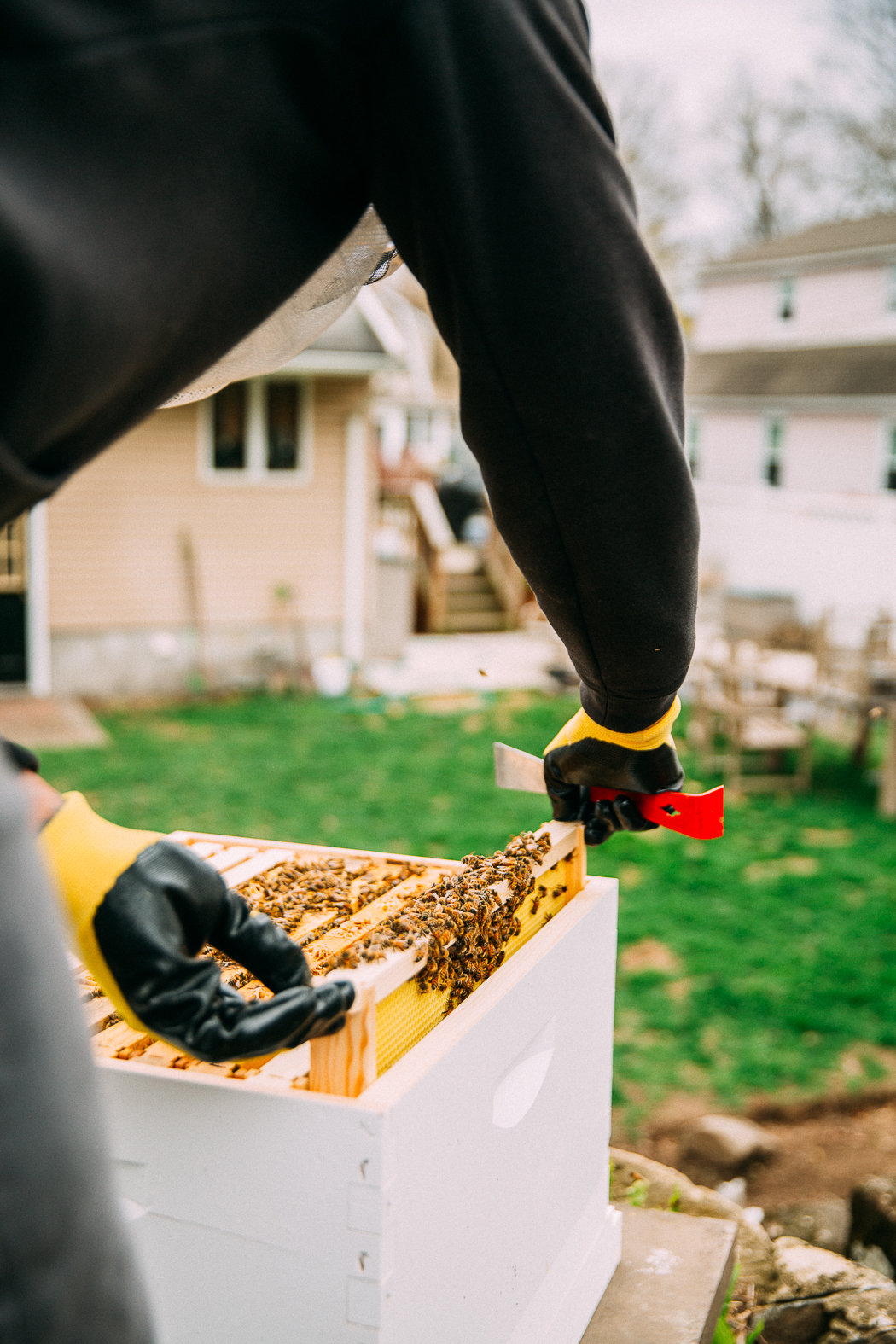
We have just recently begun the process of credit repair and correction, but so far it has been going well. We are so excited to move through this process and get our finances exactly where we want them to be so that we can continue to rebuild our lives and make our dreams into our reality. Over the winter, we collected all of the items that we would need to begin our long-time dream of becoming beekeepers. Then, in April, our first two colonies of honeybees arrived. It was so exciting and our hearts were filled with so much joyous gratitude as we watched our mutual long-time beekeeping dream come true. It truly felt like an answered prayer.

Our first couple of months with the bees have been so much fun. They truly are the most incredible little creatures! We have done a lot to practice suburban homesteading here at our home, but one day we would love to expand our efforts further by owning more land. This is why it is so important for us to get our finances in good order. If you find yourself in a similar situation, I know that it can feel daunting to take on the task. But if you find the right team to help you, it is a manageable process–especially if you choose a trusted service provider. We feel assured knowing that Lexington Law is the oldest and most respected name in credit repair, and has the legal experience and technology to both advocate and drive results for its clients. We can rest easy knowing that we are working with professionals that have a deep knowledge of consumer protection laws and know how to leverage them for our benefit.


honey bees + financial dreams

One of our primary goals through this process will be to push both of our credit scores into excellent levels. We want to grow our homesteading projects and that will take more land to make this dream come true. We would love to expand our bee hives and gardens, get lots more chickens, and one day even get goats and pigs. Some of these dreams are possible here at our home in the suburbs, but others will require more space.

We don’t want anything to hold us back from pursuing these dreams, especially not something like credit that can be fixed with the right tools. We will be working with Lexington to get everything in order and I will be sharing our journey with you right here. Follow along with our credit journey over the next few months, and stay tuned for an opportunity to start your own credit journey!


honey bees + financial dreams

you may also like

  • · · · ·

    My Journey to Financial Freedom | Part 2: The Climb

    Emergency Fund

    Three years ago, I was nearly $60,000 in debt. I had a Bachelor’s degree that didn’t appear to be worth its weight in salt and a job that couldn’t cover a fraction of my monthly bills. I was terrified.

    Today, I am closer to complete financial freedom than I ever dreamed possible. Last week, I paid off my last remaining credit card balance. This two-part post is a celebration of this incredible milestone in my journey.

    In part one, I explained how I got to that terrible place. In part two, I will explain how I’m getting out of it (and how you can do it, too).

    ————————————————————————

    1. Change the way you think about spending money. For most of my life, I believed that money was made to be spent. I believed that I *deserved* to spend every dollar that I earned on some material thing that would “make me happy.” I coveted material possessions—clothes, jewelry, electronics, cars. What I realize now is that money is not meant to be spent. You only need to earn enough money to survive. You should have enough money to buy only what you need. There is no need for excess.

    “You’re not your job. You’re not how much money you have in the bank. You’re not the car you drive. You’re not the contents of your wallet. You’re not your fuc*ing khakis.” (Fight Club)

    This shift in mindset is hard to adjust to at first. You may not like the reactions that you receive from people. Believe me, I’ve been called cheap a few times, but I pay no mind to it. I would choose cheap over poor any day.

    2. Keep a budget. I highly recommend using Mint.com. I started using it in September and it has been one of the most transformational and useful tools throughout my journey to financial freedom. It allows you to sync up all of your accounts (loans, checking, savings, etc.) in one place. Then it keeps track of every transaction that you make and sorts/organizes all of the data for you. It allows you to track your spending over time and by category. It gives you incredible perspective and insight about where your money goes each month/year. It has been a truly eye-opening experience for me.

    If you’re unwilling to try Mint, you can keep a budget on a spread sheet or even by hand. However, the important thing is to be completely conscious about where every dollar you spend is going.

    3. Use a debit card. To reap the full Mint.com experience you should use a debit card for every purchase you make. Using the debit card will automatically flag each transaction you make into the appropriate category. So if you go to Shoprite, it will get marked as groceries. If you go to Home Depot it will get marked as home. If you stop at the gas station it will get marked as automobile, and so on.

    I use my debit card (linked to my checking account) for almost every single transaction that I make. I also have all of my monthly bills (like my auto insurance, utilities, and gym membership) automatically debited from the same checking account each month. It makes keeping track of my spending that much easier. Plus, I do not like dealing with cash. The debit card is quick, easy, and is accepted almost everywhere now.

    Whether or not you use Mint.com it is a good idea to use a debit card simply because you can review all of your purchases and purchase amounts on your monthly statement. Trying to keep track of receipts is a hassle that I don’t have time for.

    4. Pay off credit cards and cut them up. Paying off my credit cards was my first priority. For awhile I tried “credit card surfing.” Let me just tell you from experience, it’s overrated and it really doesn’t work. The idea is that you surf from credit card to credit card by transferring balances. A lot of companies will give you 0% APR for 6 months if you transfer your balances over to them. After the 6 months, you “surf” to a new card with another promotional rate.

    The problem with this tactic is that it gets messy quickly, it becomes difficult to keep up with, and if you lose track you will end up getting burned by high APRs, finance fees, cancellation fees, etc. Also, it probably doesn’t look great on your credit report if you’re opening up a new card every 6 months or so.

    It is much safer and wiser to just stop using credit cards! My theory is simple and has taken me very far: If you can not afford to buy it, then you can not afford it. Period. It is simple logic.

    5. Eat in. This is one of the easiest changes to make, but it also comes with an enormous, positive impact. When I started closely tracking my spending habits, I was shocked to see how much I was spending on eating out. A meal at a decent restaurant goes for about $25 per person. If you eat out twice a week, that is $3,120 a year. If you grab lunch out during the work week, it’s about $8 a day. That’s $2,080 a year. Put those together and you could be spending $5,200 a year or more on dining out! That is outrageous and completely unnecessary.

    Since I started eating in and packing lunches, I’ve taken my monthly food spending from $500 down to $200 or less! Over time, that means enormous savings. Check out 5dollardinners.com for some awesome, inexpensive recipes. I love it! Also, investing in a crock pot was one of the wisest decisions I ever made—chili, sausage & peppers, and goulash will be your new (delicious, cheap) best friends. (Here are some more tips for eating healthy & mindfully.)

    6. Direct deposit money into savings every month. This is my final—and perhaps most important—tip. When I began my journey to financial freedom, I opened a savings account with ING Direct. It is an easy-to-use online savings account and it gives you interest on the money that you save. It also allows you to set up easy direct deposits.

    I started out small, depositing $50 a month into my savings. As I learned to keep my budget tighter and tighter, I increased the amount that I put into my savings each month. Currently, I am putting away $500+ per month and hope to get closer to $1,000 per month in the very near future.

    When you direct deposit the funds, it comes out automatically. It is painless because you don’t have to do a thing. Because it’s automatic, after awhile you don’t even notice that it’s missing. (I remember reading that on another blog several months ago and thinking, “Are you out of your mind?! I’m not going to miss it? Yea right!”) But I can honestly say that after a few months, you adjust to the missing money. You truly do not miss it once it becomes normal for that amount to be deposited into savings automatically each month.

    It has been one of the best decisions that I’ve made and because I’ve worked so hard to get to this place—I don’t touch that money! I am keeping it there for a rainy day or to pay off my student loans someday in one fell swoop.

    ————————————————————————

    As I stated at the start of this post, three years ago I was almost $60,000 in debt; I was twenty-three years old; and I was scared to death. Today, I have my finances under control! I am on the road to financial freedom and you can get here, too. Truly, it is not as hard as it seems. With common sense and a bit of dedication, it will happen. Paying off my last credit card balance was like taking chains off of my wrists for the first time in seven years. The feeling was completely priceless. If I can do it, anybody can.

    So, what are your financial goals? Have you ever been in financial prison? How did you free yourself? If you’re still there, what are you going to do to break free?

Leave a Reply

Your email address will not be published. Required fields are marked *