·

sustainable living // reusable snack bags

livelovesimple.com | toddler snack time

Recently, I’ve been taking a closer look at everything that comes into and goes out of our home. Sadly, I am realizing just how much waste my little family of three creates. It’s alarming really. I learn about things like the Great Pacific garbage patch and the North Atlantic garbage patch and my heart breaks. These are two examples, among millions, that speak to the ways that we are destroying our planet.

The damage that each of us (in this particular society) does on a daily basis is incomprehensible. When I think about the scale of the issue, I am overwhelmed and often do nothing. I adopt the ignorant mindset of — Why should I bother? My small changes will not make a difference. But I quickly see the dangerous fault in that line of thinking. The truth is that change has to start somewhere, and just because I cannot fix the problem single-handedly, does not mean that I shouldn’t take small steps in the right direction.


livelovesimple.com | toddler snack time

livelovesimple.com | toddler snack time

livelovesimple.com | toddler snack time

livelovesimple.com | toddler snack time

livelovesimple.com | toddler snack time

Regardless of where we stand on major issues, like climate change and fossil fuels, I think that we can all agree on some basic things. Pollution is real and our environment is suffering. If there are simple, affordable ways to create positive change — why not?

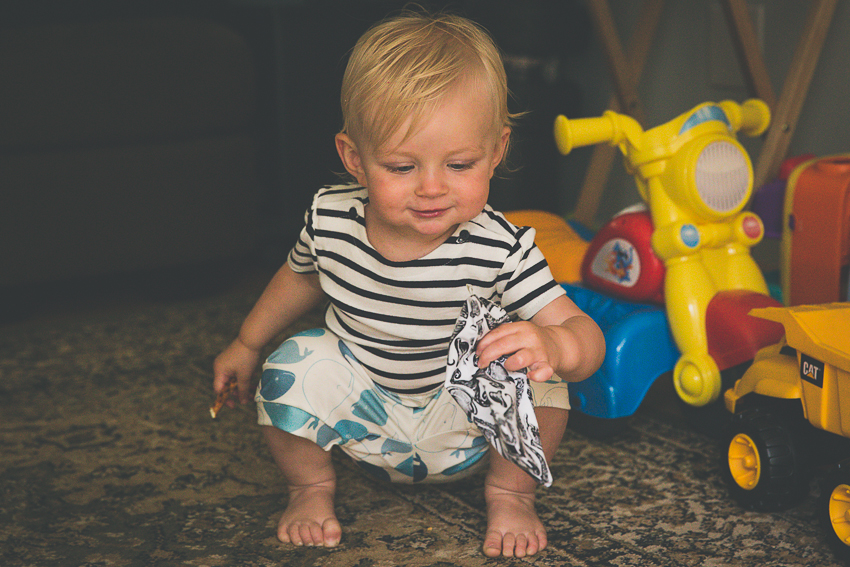
One of the changes that I’ve implemented recently is a switch from plastic snack & storage bags to reusable fabric ones, like the one Roman is holding above. We use snack bags a lot. I use them for Matthew’s lunches, on outings with Roman, and in the kitchen to store chopped veggies and such.

Plastic baggies seem like a little thing, but when I think about the long-term impact, it’s a big deal. In the past, we’ve gone through hundreds of baggies each year. It adds up financially. After each use I would occasionally wash and re-use them, but most of the time I’d toss them in the bin. The scariest part about it is that it takes at least 500 years for each plastic bag to biodegrade.

I set out to find a couple of small business owners that make high-quality, reusable snack bags. I wanted the bags to be well-made so that they would last awhile. I was also looking for bags that would be fun to use for Roman’s snacks but also some more neutral/masculine ones that I could use for Matthew’s lunches. I found two Etsy shops that offered exactly what I was looking for.


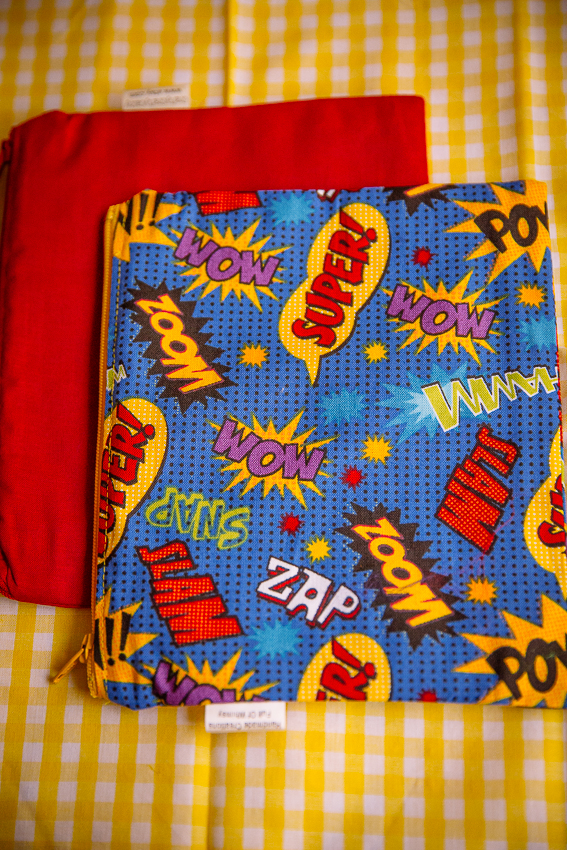
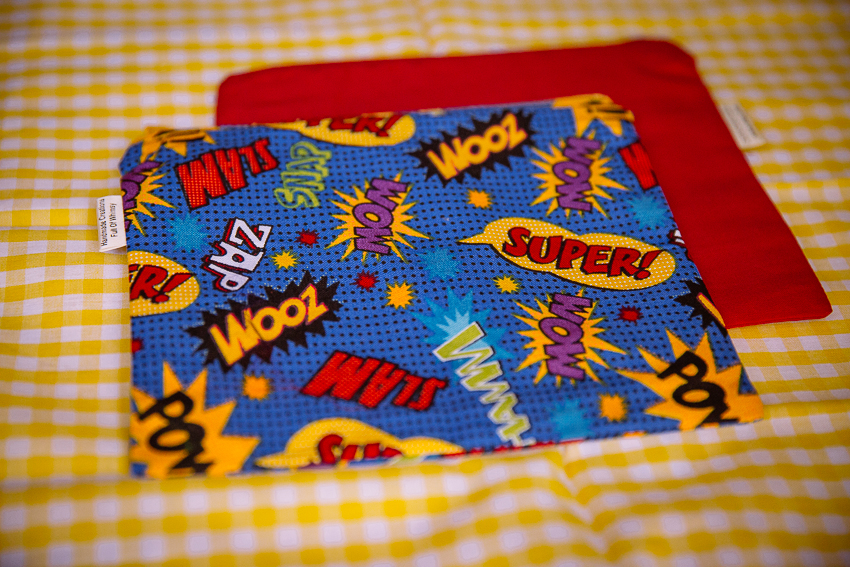
First up is Crafty Crafty Cathy. The shop owner, Cathy, is a former first grade teacher turned stay-at-home mom. Cathy is always working on creative projects that make her feel excited and inspired. She takes great care in everything she creates — with special attention to detail.

Cathy’s snack and sandwich bags are incredibly well-made. I love her selection of both fun and mature patterns & styles. The bags can easily be cleaned with a wet cloth, or you can pull the liner outward, wash them on cold, and hang dry. The zipper closures allow little fingers to open & close the bags easily. We’ve been using them for a few weeks now and they are perfect.
reusable snack bags | livelovesimple.com

reusable snack bags | livelovesimple.com

reusable snack bags | livelovesimple.com

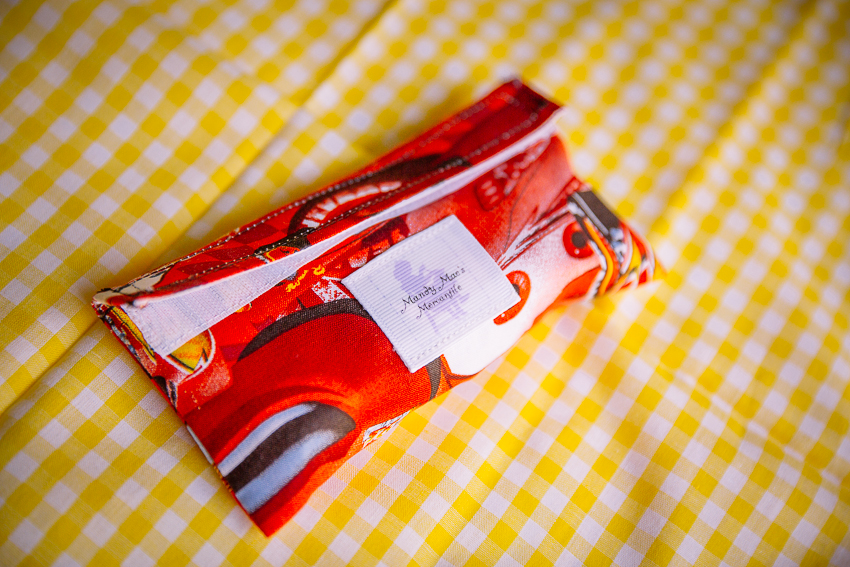
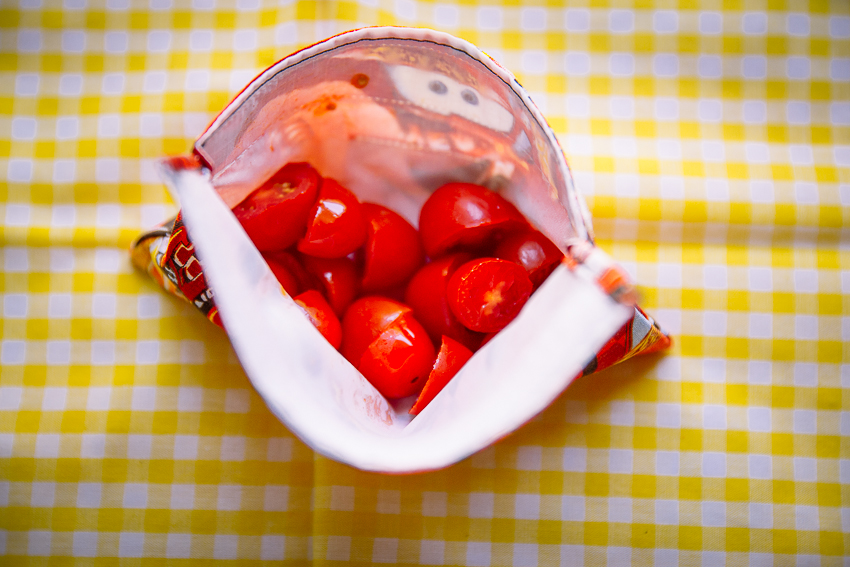
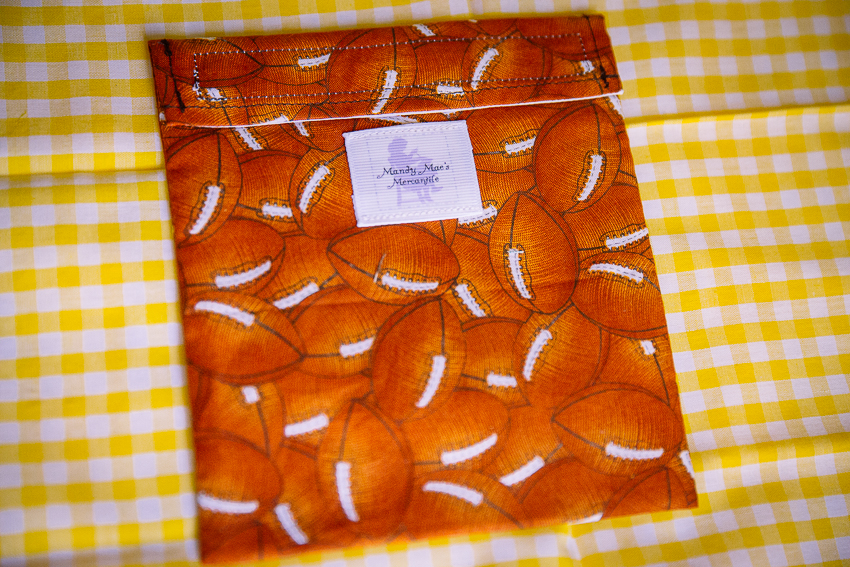
I wanted to try a few different styles of baggies, so I’ve also been using a few from Mandy Mae’s Mercantile. They are equally amazing. Mandy Mae’s is the Etsy shop of Amanda (Mandy) Passmore and Jeanni (Mae) Clinton. Jeanni has always loved sewing and giving homemade gifts. When Amanda became pregnant, she ventured into creating an all-natural home. When she decided to quit teaching to be a stay-at-home mom, the two decided to create Mandy Mae’s to help others conserve the environment.

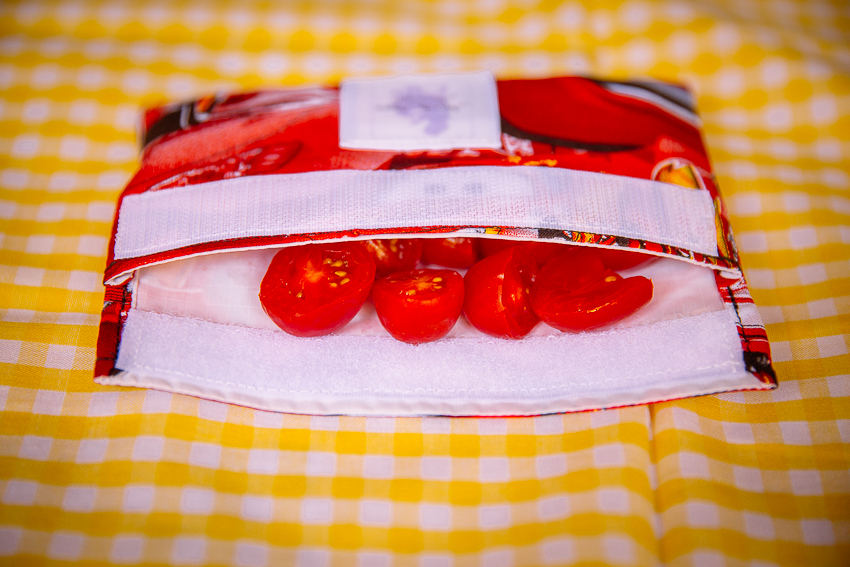
I just love our reusable bags from Mandy Mae’s. Each bag is made with a layer of cotton and an easy-to-clean layer of PUL. They also have a fun and beautiful selection of fabric to choose from. Their baggies have tight-sealing velcro closures to keep snacks tucked safely inside.
reusable snack bags | livelovesimple.com

reusable snack bags | livelovesimple.com

reusable snack bags | livelovesimple.com

reusable snack bags | livelovesimple.com


I am very happy with my decision to switch away from disposable baggies. It’s a baby step, but it’s a step in the right direction. I’ve implemented several changes like this one and look forward to sharing them soon.

Note: This is not a sponsored post. I personally reached out and asked to partner with these shops because I feel strongly about their missions. I highly recommend checking them out if you are looking to make a similar change in your home. Visit Crafty Crafty Cathy and Mandy Mae’s Mercantile on Etsy.
you may also like

  • · · · ·

    My Journey to Financial Freedom | Part 2: The Climb

    Emergency Fund

    Three years ago, I was nearly $60,000 in debt. I had a Bachelor’s degree that didn’t appear to be worth its weight in salt and a job that couldn’t cover a fraction of my monthly bills. I was terrified.

    Today, I am closer to complete financial freedom than I ever dreamed possible. Last week, I paid off my last remaining credit card balance. This two-part post is a celebration of this incredible milestone in my journey.

    In part one, I explained how I got to that terrible place. In part two, I will explain how I’m getting out of it (and how you can do it, too).

    ————————————————————————

    1. Change the way you think about spending money. For most of my life, I believed that money was made to be spent. I believed that I *deserved* to spend every dollar that I earned on some material thing that would “make me happy.” I coveted material possessions—clothes, jewelry, electronics, cars. What I realize now is that money is not meant to be spent. You only need to earn enough money to survive. You should have enough money to buy only what you need. There is no need for excess.

    “You’re not your job. You’re not how much money you have in the bank. You’re not the car you drive. You’re not the contents of your wallet. You’re not your fuc*ing khakis.” (Fight Club)

    This shift in mindset is hard to adjust to at first. You may not like the reactions that you receive from people. Believe me, I’ve been called cheap a few times, but I pay no mind to it. I would choose cheap over poor any day.

    2. Keep a budget. I highly recommend using Mint.com. I started using it in September and it has been one of the most transformational and useful tools throughout my journey to financial freedom. It allows you to sync up all of your accounts (loans, checking, savings, etc.) in one place. Then it keeps track of every transaction that you make and sorts/organizes all of the data for you. It allows you to track your spending over time and by category. It gives you incredible perspective and insight about where your money goes each month/year. It has been a truly eye-opening experience for me.

    If you’re unwilling to try Mint, you can keep a budget on a spread sheet or even by hand. However, the important thing is to be completely conscious about where every dollar you spend is going.

    3. Use a debit card. To reap the full Mint.com experience you should use a debit card for every purchase you make. Using the debit card will automatically flag each transaction you make into the appropriate category. So if you go to Shoprite, it will get marked as groceries. If you go to Home Depot it will get marked as home. If you stop at the gas station it will get marked as automobile, and so on.

    I use my debit card (linked to my checking account) for almost every single transaction that I make. I also have all of my monthly bills (like my auto insurance, utilities, and gym membership) automatically debited from the same checking account each month. It makes keeping track of my spending that much easier. Plus, I do not like dealing with cash. The debit card is quick, easy, and is accepted almost everywhere now.

    Whether or not you use Mint.com it is a good idea to use a debit card simply because you can review all of your purchases and purchase amounts on your monthly statement. Trying to keep track of receipts is a hassle that I don’t have time for.

    4. Pay off credit cards and cut them up. Paying off my credit cards was my first priority. For awhile I tried “credit card surfing.” Let me just tell you from experience, it’s overrated and it really doesn’t work. The idea is that you surf from credit card to credit card by transferring balances. A lot of companies will give you 0% APR for 6 months if you transfer your balances over to them. After the 6 months, you “surf” to a new card with another promotional rate.

    The problem with this tactic is that it gets messy quickly, it becomes difficult to keep up with, and if you lose track you will end up getting burned by high APRs, finance fees, cancellation fees, etc. Also, it probably doesn’t look great on your credit report if you’re opening up a new card every 6 months or so.

    It is much safer and wiser to just stop using credit cards! My theory is simple and has taken me very far: If you can not afford to buy it, then you can not afford it. Period. It is simple logic.

    5. Eat in. This is one of the easiest changes to make, but it also comes with an enormous, positive impact. When I started closely tracking my spending habits, I was shocked to see how much I was spending on eating out. A meal at a decent restaurant goes for about $25 per person. If you eat out twice a week, that is $3,120 a year. If you grab lunch out during the work week, it’s about $8 a day. That’s $2,080 a year. Put those together and you could be spending $5,200 a year or more on dining out! That is outrageous and completely unnecessary.

    Since I started eating in and packing lunches, I’ve taken my monthly food spending from $500 down to $200 or less! Over time, that means enormous savings. Check out 5dollardinners.com for some awesome, inexpensive recipes. I love it! Also, investing in a crock pot was one of the wisest decisions I ever made—chili, sausage & peppers, and goulash will be your new (delicious, cheap) best friends. (Here are some more tips for eating healthy & mindfully.)

    6. Direct deposit money into savings every month. This is my final—and perhaps most important—tip. When I began my journey to financial freedom, I opened a savings account with ING Direct. It is an easy-to-use online savings account and it gives you interest on the money that you save. It also allows you to set up easy direct deposits.

    I started out small, depositing $50 a month into my savings. As I learned to keep my budget tighter and tighter, I increased the amount that I put into my savings each month. Currently, I am putting away $500+ per month and hope to get closer to $1,000 per month in the very near future.

    When you direct deposit the funds, it comes out automatically. It is painless because you don’t have to do a thing. Because it’s automatic, after awhile you don’t even notice that it’s missing. (I remember reading that on another blog several months ago and thinking, “Are you out of your mind?! I’m not going to miss it? Yea right!”) But I can honestly say that after a few months, you adjust to the missing money. You truly do not miss it once it becomes normal for that amount to be deposited into savings automatically each month.

    It has been one of the best decisions that I’ve made and because I’ve worked so hard to get to this place—I don’t touch that money! I am keeping it there for a rainy day or to pay off my student loans someday in one fell swoop.

    ————————————————————————

    As I stated at the start of this post, three years ago I was almost $60,000 in debt; I was twenty-three years old; and I was scared to death. Today, I have my finances under control! I am on the road to financial freedom and you can get here, too. Truly, it is not as hard as it seems. With common sense and a bit of dedication, it will happen. Paying off my last credit card balance was like taking chains off of my wrists for the first time in seven years. The feeling was completely priceless. If I can do it, anybody can.

    So, what are your financial goals? Have you ever been in financial prison? How did you free yourself? If you’re still there, what are you going to do to break free?

6 Comments

  1. Yes! I love this post! We’ve been trying to take steps to become more environmentally friendly – we stopped using paper towels & plates, stopped buying bottled water, stopped using dryer sheets – and I’ve been wanting to start phasing out our baggies!

  2. This is such a cool post – I love those baggies!! Also, these pictures are perfect! I love the lighting and Roman’s outfit is too cute!

  3. It’s like you read my mind! I’ve been having major thoughts about reusable things in my home instead of disposable. I try and use cloth napkins as much as possible now, reusable shopping bags when I go grocery shopping. I use plastic bags for the cat little still and I’m not 100% onto using rags instead of paper towels (but I’m making progress!) My next thought was the reusable snack bags. I mean, they’re only holding food which isn’t gross so it’s such an easy jump. I’ve been debating on brands and where to purchase them so this post is super helpful!

  4. Stopping by from the Blogging Collective on FB! I too am seeing just how much waste we create and as a science teacher this is something that is near and dear to my heart. I love the reusable bags! Great post, great photos!

  5. This is something I’ve been thinking about a lot lately. We waste so much. Not just trash, but food too. Between my roommate and I and our kids, there are 6 people in this house, and I’m pregnant. We have a LOT of trash.

    I’ve checked out reusable bags like this before and have wondered how well they hold up. Thank you for your review on products like this! 🙂

Leave a Reply to Casey Carroll Cancel reply

Your email address will not be published. Required fields are marked *