An Introduction to Abusive Behavior
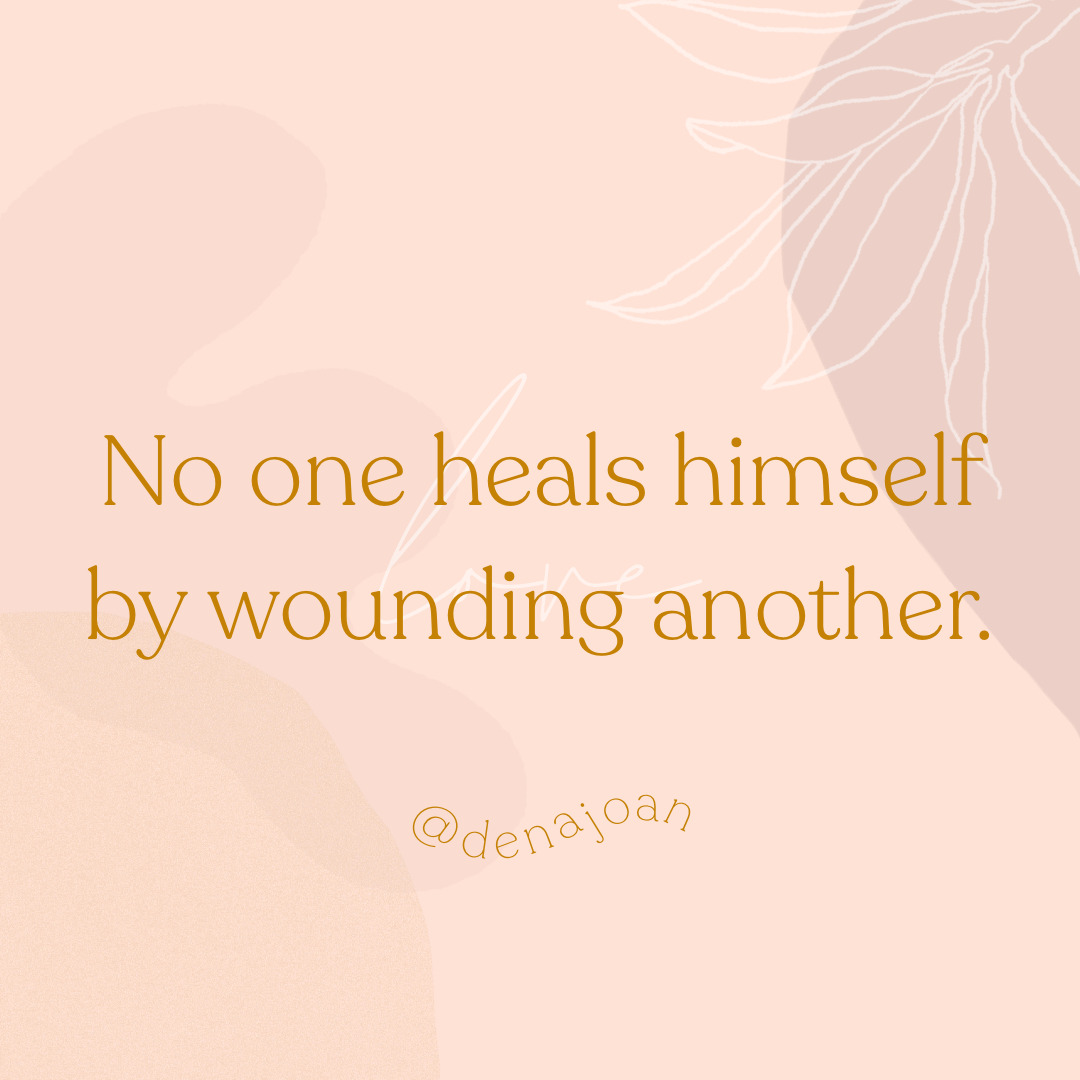
Bullying does not just happen to children. Adults can be bullies too. Adult bullying behavior is also called abusive, violent, unstable, narcissistic and psychopathic, to name a few. Whatever word you use to describe it, abusive behavior is at the center of it.

First let’s address the why. People become abusers for a whole host of reasons, too many to list. They were abused themselves. They have intense insecurity issues. They developed abusive behavior as a coping mechanism to some other trauma. The list goes on. In any case, it happens.

It’s also important to remember that it takes two in order for abuse to occur. There is an abuser and there is the abused. Likewise, the abused became susceptible to abuse for a reason. This is not victim-blaming, it is a fact. Some are prone to abuse and are even attracted to abusive personalities because of how “love” was modeled to them at some point in their lives.

Abuse occurs for a variety of reasons often related to a power-structure dynamic. The abuser has control over the abused in some way. Perhaps the abuser is a boss, a landlord, a teacher, a parent, or some other individual that has natural authority and abuses it. The pair can also be peers, friends, lovers, siblings. Abusive behavior can crop up in almost any dynamic.

So what do we do about it? I’m not going to speak about domestic violence today because it cannot be addressed simply. It is so complicated that nothing could address it in a few short paragraphs. I’m going to talk about bullying behavior where there is no imminent danger.

In these cases, two things must be done. First, the abused needs to make an active decision to change the situation. Next, they must pursue all means necessary to put an end to the abuse. (I say that the abused should do this because it is very rare that an abuser will make a decision to change such a circumstance of their own accord.) This can be incredibly difficult and unnatural, especially if the person is a people-pleaser of any sort. The abused will need to utilize any resources at their disposal, including family, friends, and even legal action.

The abused will struggle to pursue such means. It is in their nature to “give in,” to resolve things peacefully, to avoid conflict at all costs. This is why an abuser chooses a person like this as a target. They know that they can get away with it. But once their victim has had enough, sometimes they will finally do the work to put an end to the situation. At this point, the abuser may ramp up their abusive behaviors to try and intimidate their victim into not taking action. But the victim must not be deterred.

Abuse is never okay. It is never acceptable and it should not be tolerated. It is a hugely unfortunate part of life, but it does happen. Gratefully we live in a society that is beginning to wake up to the reality of abuse that occurs in so many areas of life. There are resources available to help victims of abuse. Here are some that may help.

If you are a victim of abuse at work, you should be able to reach out to your human resources staff for assistance. If there is no HR staff, reach out to a trusted colleague or another person in a position to help. If there is no one that can help you, you may be forced to leave your job because being in a position where there is no one who can help you is simply not safe. Your mental health (and eventually physical health) can be severely damaged. No job is worth it.

If you are a victim of abuse in any other circumstance, it may be best to remove yourself from it. You may want to “keep trying,” but truly allowing abuse to continue is never worth it.

As I mentioned earlier, I am not addressing the issue of domestic violence today, I may address this here one day, but it is far too much to address in this post. However, if this is an issue for you, the number for the National Domestic Violence Hotline in the US is: 800-799-7233 and the website is: https://www.thehotline.org/.

I write this piece today as victim of abuse myself. I have experienced abuse in many forms. I truly was the definition of the abused and would go to any length to keep peace and avoid conflict. At this point in my life, I have finally implemented many changes that protect me from being abused. I am no longer afraid to set boundaries, to defend myself or to do whatever it takes to protect my peace. It isn’t easy, in fact it’s incredibly difficult–painful even–for me to put myself first and refuse to accept abusive behaviors that are directed toward me. But I am committed to this practice. I know that I deserve it and so does everyone else in this world. We are all entitled to peace and fair treatment.

you may also like

  • · · ·

    Tired of Conflict Bringing You Down?

    Dealing With Conflict

    Conflict takes many forms—misunderstanding, frustration, ignorance, hatred, envy, and so on—but despite the cause, the result is largely the same: someone walks away with hurt feelings.

    The truth is, however, that this is not necessary. You can choose to be unaffected by conflict. It is not an easy thing to accomplish. You have, after all, lived your life believing that conflict equals pain. But with practice & patience you can learn to live above conflict in a place of true peace.

    “True peace can not be disturbed by gain or loss.”

    The reason that conflict hurts us is because we allow it to. Most pain comes from another person(s) or from our own minds. The key to being unaffected by conflict is to understand that anything that another person says to us (out of anger, frustration, etc.) is actually a reflection of her feelings about herself and is rooted in fear. Likewise, anything that our mind says to us (self-criticism, self-hatred, etc.) is also rooted in fear. All forms of discomfort—sadness, anxiety, worry, rage, hatred, envy, and so on—are rooted in fear.

    When you accept that angry words are actually reflections of fear, it makes them much less painful to tolerate. Even the angriest and most cruel of arguments is based in fear & insecurity.

    For example, you have a large project due at work. You bring it into your boss’s office an hour prior to the deadline. She notices that it is riddled with errors. Her face turns red and she begins to scream. “You idiot! How could you be so stupid? This is unacceptable. I can not believe I ever hired you. Get out!”

    On one hand, you are devastated. Her words have stung you at your core. You are insulted, sad, angry, afraid. But if you really stop to analyze the situation, why do you think she acted this way? Most likely, she is afraid. Most likely, she is terrified about the way that your “failure” is going to reflect on her. After all, wasn’t it her who hired you, gave you this assignment, failed to give you proper instruction, and so on? What will her boss think when she turns this project into him? Her explosion was based in fear.

    Another example, it is Saturday afternoon and you are sitting on the couch. Your husband comes in the door and notices that you have not swept the floors. He begins to speak angrily, “Haven’t you swept the floors? Didn’t you see this dirt? You’ve been so lazy recently.” You are crushed and devastated. How could he be so mean? But then again, you stop and analyze. The lawn is not mowed, the gutters are uncleaned, there are piles of crap strewn about the yard. Your husband is insecure about all of his unfinished chores and is projecting his self-frustration onto you. His remarks were based in fear and insecurity.

    If you take the time to truly analyze, you will find that almost every conflict is rooted in fear. Therefore, the vast majority of hurtful things that are ever said to you actually have absolutely nothing to do with you. This is an incredibly liberating concept (not to be confused with the rare scenario when you are actually wrong by the way). Still, just because the other person’s (or even your own self-inflicted) anger is based in fear, that still doesn’t make it right. Yes, perhaps both your boss and your husband were entirely out of line. It is alright for you to tell them so, but what is more important is the way that you process the conflict within yourself.

    Most people internalize the conflict. In any case, you take what was said and push it deep within yourself. Perhaps you believe the other person words. “Yes, I am lazy, stupid, ugly, etc.” The conflict turns into emotional pain and festers within you eventually becoming depression, anxiety, and so on. But as I mentioned at the start, none of that is necessary.

    You must accept the conflict (words) for what they are—someone else’s (or even your own mind’s) fears and insecurities. Fear is nothing to be afraid of or affected by. Most fear is completely unnecessary (read more about that).

    After the conflict, words, and judgments have passed, simply allow all of it to pass through and around you like water or air. Understand that it is something outside of you, that has nothing to do with you at all. It is not inside of you, it did not come from you, and you do not have to absorb it. Simply let it pass and then move on.

    Holding onto the pain of conflict is insane and unnatural. What do the birds do after the great storm has passed? They sing, of course! You will never hear the birds singing so sweetly and so loudly as they do after the storm has passed and the sun shines again. They do not mourn the broken nest, the wet feathers, or the lost supper. They simply sing and praise the light in gratitude. They rejoice that the sun has come again.

    In his book, The Power of Now: A Guide to Spiritual Enlightenment, Eckhart Tolle talks about his observation of duck fights. Two ducks approach one another. They squawk in anger for mere seconds. Then they turn away from one another, flap their great wings a few times, and swim on as if it never happened. This is true wisdom, true peace, in action. There is so much that we can learn from this simple observation.

    There is really no need to hold onto anger or discomfort. There is really no need to suffer. In life, you will find many reason to suffer. But a good reason to suffer, you will never find. Let conflicts pass through and around you. Do not hold onto them. You will almost always find that it never has anything to do with you anyway.

Leave a Reply

Your email address will not be published. Required fields are marked *