· · · · ·

Volunteering Matters: Deer Exclosure at Apshawa Preserve

Volunteering Matters is an ongoing series where I share photographs & thoughts regarding my favourite volunteer projects.

Volunteering is an important part of my life. I’m always looking for ways to volunteer my time & energy to good, fulfilling causes. While it can be difficult to manage multiple careers, it’s easy to take advantage of numerous volunteer opportunities to satisfy my many passions & interests.

Volunteering allows me to forge friendships, pursue my passions, lift my self-esteem, and build/strengthen my body of knowledge. Perhaps best of all, volunteering just makes me feel good.

Last June, I started working with the New Jersey Conservation Foundation (NJCF). NJCF’s mission is to preserve New Jersey’s land and natural resources for the benefit of all. Since 1960, NJCF has protected over 120,000 acres of natural areas and farmland in New Jersey—from farms to forests to urban and suburban parks.

My first task as a volunteer for NJCF was to create a scavenger hunt for children at Apshawa Preserve.  My next task will be a longer-term project.  Along with a few other volunteers & staff, I will be monitoring the deer exclosure at Apshawa Preserve.

seahorse

Why a deer exclosure?
The 576-acre preserve has an overpopulation of white-tail deer. The deer—being native to the area—eat the native plant life. In turn, the native plant life is disappearing and the invasive species are thriving. The 3.2-mile-long fence will keep deer out and promote reforestation.

purple iris
Native Iris, planted by NJCF Staff & Volunteers

How do you get in & out?
There are self-closing gates placed all along the fence that make it super-easy (for humans!) to get in & out.

What about other animals?
Log bridges are placed along the fence to allow animals like bobcats, foxes, raccoons, possums and even bears to easily cross into and out of the preserve. Additionally small paths are carved beneath the fence in places to allow small reptiles—like turtles & frogs—to pass underneath.
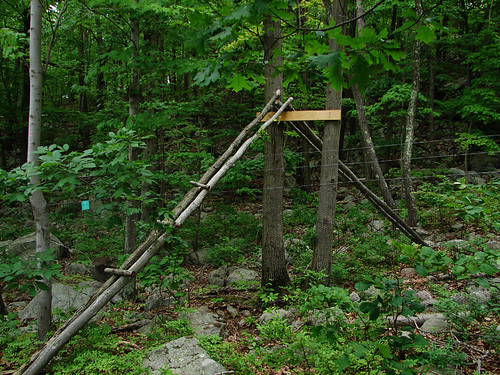
animal crossing bridge

Who is paying for this?
The project is funded by a $125,000 grant from the National Forest Foundation. Volunteers like myself do not get paid. We do it because we want to. (Side note: That’s the point of “volunteering.”) 😉

Is there vandalism?
Sadly, vandalism is an issue. There are people who oppose the fence for various reasons. Hunters do not like the fence (even though there are countless other places to hunt nearby). Local folks—neighbors, hikers, etc.—don’t like the fence because, well, I think it’s because some people don’t like change. ATV riders don’t like the fence though it is illegal to ride in the preserve. And finally, there are others who (seemingly) just like to be difficult.

That said, some of these unhappy people vandalize and cut the fence. I snapped this photograph on Saturday. I’m pretty sure it wasn’t a bear…
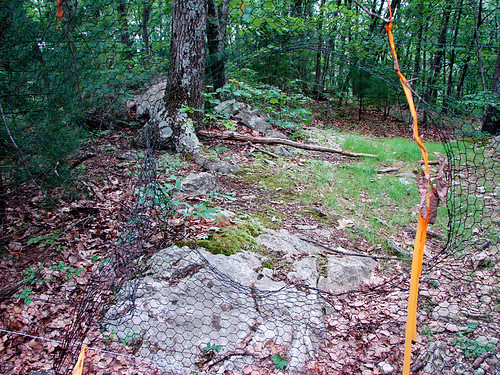
vandalism
Don't think it was a bear...

Are you afraid?
No. I am not afraid. I am not afraid of the vandals because they are unlikely to vandalize when there are people around. I do get nervous about bears but the reality is that black bears (the only kind we get around here) are generally docile creatures. So long as you make noise as you walk—set your cell phone to go off every few minutes, make loud footsteps, or (in my case) talk/sing to yourself & your dog—the bears will head away from you, not toward you.

seahorse

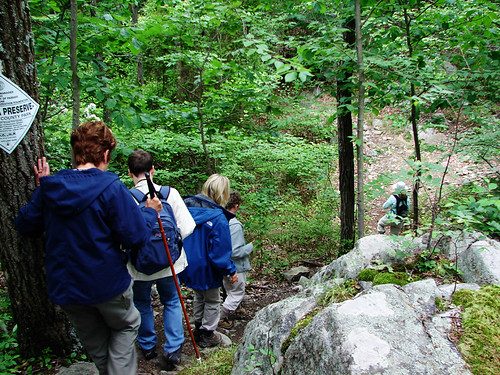
Saturday was National Trails Day. To celebrate, an NJCF staff-person lead a group of us on a one-hour hike through Apshawa. Afterward, myself and a couple other volunteers received our orientation about monitoring the deer fence. Our task will be to monitor the fence about once a week & make minor repairs. We will also report back on major damage (fallen trees, vandalism, etc.) so that staff people can come out & make those fixes.

I am so excited to be taking part in this project! Apshawa is such an incredibly beautiful place and knowing that I am helping to keep it that way is overwhelming in such a great way.

Here are a few photographs that I snapped on Saturday.
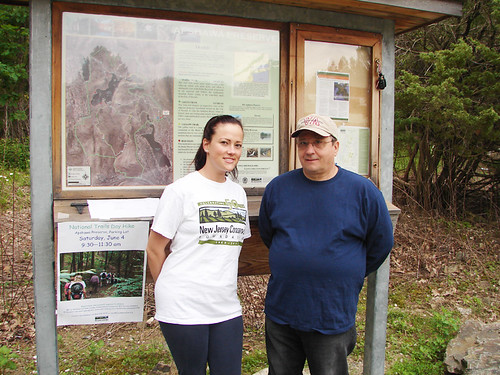
volunteers
Me & John - NJCF Volunteers
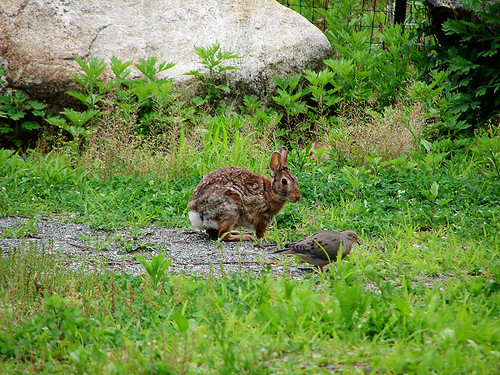
unlikely friends
An unlikely pair!

hikers

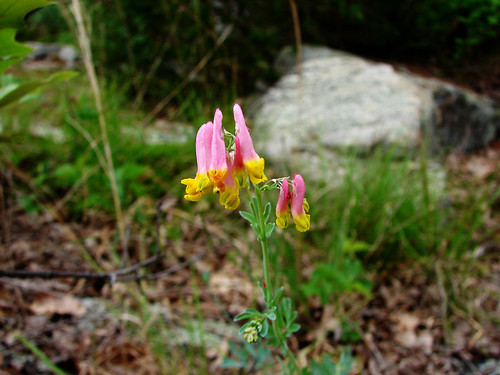
pink yellow wildflower

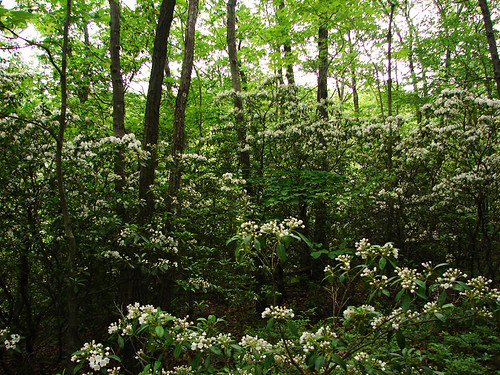
Mountain Laurel
Beautiful stretches of Mountain Laurel in bloom, looks like snow in the middle of June!

you may also like

  • · · ·

    Tired of Conflict Bringing You Down?

    Dealing With Conflict

    Conflict takes many forms—misunderstanding, frustration, ignorance, hatred, envy, and so on—but despite the cause, the result is largely the same: someone walks away with hurt feelings.

    The truth is, however, that this is not necessary. You can choose to be unaffected by conflict. It is not an easy thing to accomplish. You have, after all, lived your life believing that conflict equals pain. But with practice & patience you can learn to live above conflict in a place of true peace.

    “True peace can not be disturbed by gain or loss.”

    The reason that conflict hurts us is because we allow it to. Most pain comes from another person(s) or from our own minds. The key to being unaffected by conflict is to understand that anything that another person says to us (out of anger, frustration, etc.) is actually a reflection of her feelings about herself and is rooted in fear. Likewise, anything that our mind says to us (self-criticism, self-hatred, etc.) is also rooted in fear. All forms of discomfort—sadness, anxiety, worry, rage, hatred, envy, and so on—are rooted in fear.

    When you accept that angry words are actually reflections of fear, it makes them much less painful to tolerate. Even the angriest and most cruel of arguments is based in fear & insecurity.

    For example, you have a large project due at work. You bring it into your boss’s office an hour prior to the deadline. She notices that it is riddled with errors. Her face turns red and she begins to scream. “You idiot! How could you be so stupid? This is unacceptable. I can not believe I ever hired you. Get out!”

    On one hand, you are devastated. Her words have stung you at your core. You are insulted, sad, angry, afraid. But if you really stop to analyze the situation, why do you think she acted this way? Most likely, she is afraid. Most likely, she is terrified about the way that your “failure” is going to reflect on her. After all, wasn’t it her who hired you, gave you this assignment, failed to give you proper instruction, and so on? What will her boss think when she turns this project into him? Her explosion was based in fear.

    Another example, it is Saturday afternoon and you are sitting on the couch. Your husband comes in the door and notices that you have not swept the floors. He begins to speak angrily, “Haven’t you swept the floors? Didn’t you see this dirt? You’ve been so lazy recently.” You are crushed and devastated. How could he be so mean? But then again, you stop and analyze. The lawn is not mowed, the gutters are uncleaned, there are piles of crap strewn about the yard. Your husband is insecure about all of his unfinished chores and is projecting his self-frustration onto you. His remarks were based in fear and insecurity.

    If you take the time to truly analyze, you will find that almost every conflict is rooted in fear. Therefore, the vast majority of hurtful things that are ever said to you actually have absolutely nothing to do with you. This is an incredibly liberating concept (not to be confused with the rare scenario when you are actually wrong by the way). Still, just because the other person’s (or even your own self-inflicted) anger is based in fear, that still doesn’t make it right. Yes, perhaps both your boss and your husband were entirely out of line. It is alright for you to tell them so, but what is more important is the way that you process the conflict within yourself.

    Most people internalize the conflict. In any case, you take what was said and push it deep within yourself. Perhaps you believe the other person words. “Yes, I am lazy, stupid, ugly, etc.” The conflict turns into emotional pain and festers within you eventually becoming depression, anxiety, and so on. But as I mentioned at the start, none of that is necessary.

    You must accept the conflict (words) for what they are—someone else’s (or even your own mind’s) fears and insecurities. Fear is nothing to be afraid of or affected by. Most fear is completely unnecessary (read more about that).

    After the conflict, words, and judgments have passed, simply allow all of it to pass through and around you like water or air. Understand that it is something outside of you, that has nothing to do with you at all. It is not inside of you, it did not come from you, and you do not have to absorb it. Simply let it pass and then move on.

    Holding onto the pain of conflict is insane and unnatural. What do the birds do after the great storm has passed? They sing, of course! You will never hear the birds singing so sweetly and so loudly as they do after the storm has passed and the sun shines again. They do not mourn the broken nest, the wet feathers, or the lost supper. They simply sing and praise the light in gratitude. They rejoice that the sun has come again.

    In his book, The Power of Now: A Guide to Spiritual Enlightenment, Eckhart Tolle talks about his observation of duck fights. Two ducks approach one another. They squawk in anger for mere seconds. Then they turn away from one another, flap their great wings a few times, and swim on as if it never happened. This is true wisdom, true peace, in action. There is so much that we can learn from this simple observation.

    There is really no need to hold onto anger or discomfort. There is really no need to suffer. In life, you will find many reason to suffer. But a good reason to suffer, you will never find. Let conflicts pass through and around you. Do not hold onto them. You will almost always find that it never has anything to do with you anyway.

2 Comments

  1. Very nice post and some great pics. Volunteering is a great way to make a difference and feel good about yourself while helping others. Enjoy yourself while monitoring the deer fence and be careful of the 2 footed crazy animals.

    1. @ Lou – Thanks so much. Glad you enjoyed the post! Yes, volunteering is so good for the soul. 🙂

      You’re right. It’s definitely the two-legged animals that I need to watch out for.

Leave a Reply

Your email address will not be published. Required fields are marked *