·

The Gulf Oil Spill

How is it possible that humans killed in excess of one hundred million fellow humans in the twentieth century alone? Humans inflicting pain of such magnitude on one another is beyond anything you can imagine and that’s not taking into account the mental, emotional, and physical violence; the torture, pain, and cruelty they continue to inflict on each other as well as on other sentient beings on a daily basis.

Do they act in this way because they’re in touch with their natural state, the joy of life within? Of course not, only people who are in a deeply negative state, who feel very bad indeed, would create such a reality as a reflection of how they feel. Now they are engaged in destroying nature and the planet that sustains them. Unbelievable, but true.

Humans are a dangerously insane and very sick species. That’s not a judgment, it’s a fact. It is also a fact that the sanity is there underneath the madness. Healing and redemption are available right now. —Eckhart Tolle, The Power of Now

One reason for my recent silence is the fact that I have been deeply affected by the BP oil spill in the Gulf. It has been difficult for me to express my feelings about this, as I imagine it has been for many people. However, the excerpt above from The Power of Now is the closest thing that I can find to express my current feelings toward the human race.

The Blame Game

Much of the finger-pointing that has gone in the wake of this tragedy is fruitless. I have heard individuals blame BP, the government, the American people, and even Barack Obama. The truth is that everyone is responsible for what happened. The United States is a nation consumed by greed, sloth, and excess. This is not a judgment, it is a fact. And yes, I include myself in the equation.

The question is not, who is at fault, but rather, what are we going to do from here on out? How are we going to prevent this from happening again? How are we going to treat the root of the problem—our dangerous dependency on oil?

Accountability

Despite the fact that I hold everyone responsible, I still believe that BP must be held accountable for the dangerous, unethical practices that caused this tragedy.

Internal documents from BP show that there were serious problems and safety concerns with the Deepwater Horizon rig far earlier than those the company described to Congress last week.

The problems involved the well casing and the blowout preventer, which are considered critical pieces in the chain of events that led to the disaster on the rig.

The documents show that in March, after several weeks of problems on the rig, BP was struggling with a loss of “well control.” And as far back as 11 months ago, it was concerned about the well casing and the blowout preventer. —NY Times

This criminal negligence led to the death and injury of countless human beings and animals. The individuals involved must be held accountable and criminally prosecuted. BP must be made to pay reparations to all of the individuals and business affected at whatever cost. And it is the duty of the United States government to ensure that this happens.

The positive-spin public relations campaign that BP has launched is a sin. During the first stage of my research for this article, I thought about sharing things that you, my readers, could do about the spill. I typed, “what can i do about the gulf oil spill?” into a Google search. I was horrified by the ad featured at the top of the search results. See for yourself.
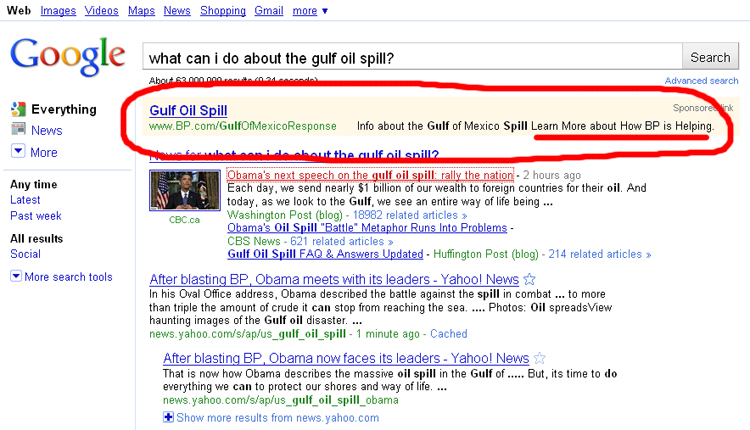
“Learn More about How BP is Helping.” Seriously? What is your definition of helping? You can not help a human being after you murder her. Likewise, you can not help the environment after you murder it.

When you click the link (which I could not do without cringing) you are taken to a site featuring smiling men and women helping animals, hosing feathers, cleaning oil, and so on. It is a lie, a false beautiful depiction of humanity—a false coming together.

The truth is that this positive-spin public relations campaign is an insult to everyone. More, it is an insult to the environment and the animals that have been raped & destroyed at the hands of greed.

There should be a mandate that forbids anyone from supporting BP’s positive-spin public relations campaign. Google should remove the ad that I’ve captured above as well as any others like it.

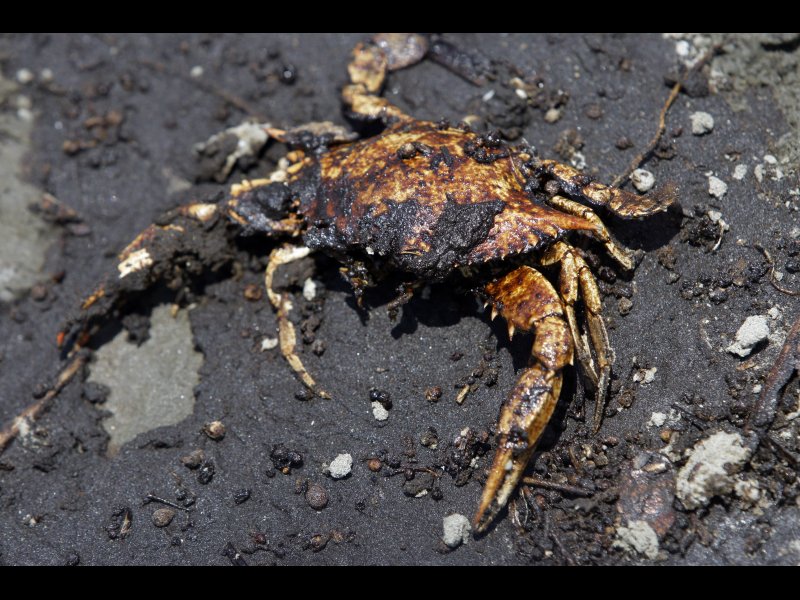
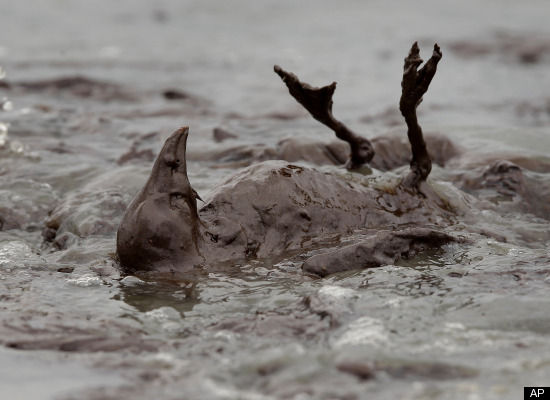
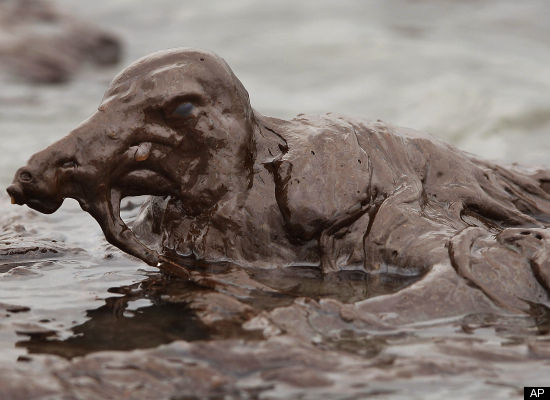
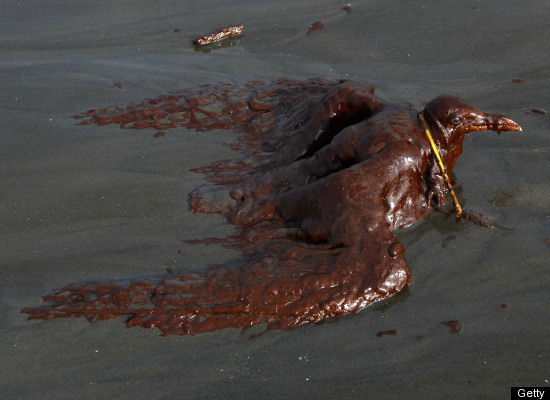
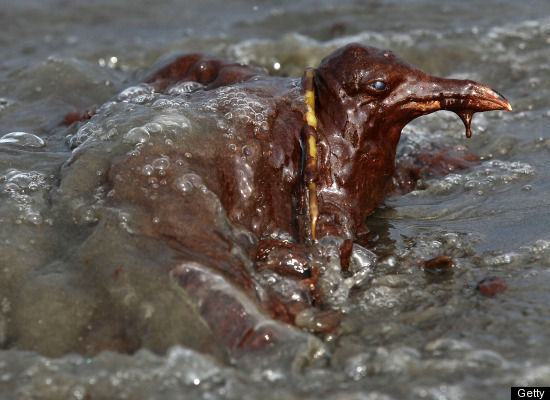
Instead of photographs of lies, we must share photographs of the truth. If BP will not do it, then the rest of the world must.

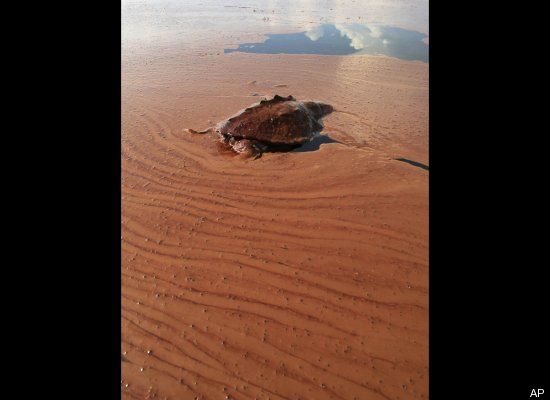
To see more photographs depicting this devastation, see the Huffington Post’s Animals in Peril.

Where Do We Go from Here?

Like I mentioned above, I thought about using this post to share things that you, my readers, could do about the oil spill. However, since then I have decided not to. There are many brave, wonderful people and groups working to combat the oil spill right now. I do not discourage you from supporting those causes.

On the other hand, though, I am hesitant to ask people to give money to the Gulf crisis. I believe that BP should be made to cover the costs of these damages. Should the American (and global) population be encouraged to donate money to the clean up? BP has enough money at this point to run top placing ads and launch an intense positive-spin public relations campaign that must have cost millions. At this point, shouldn’t BP’s money be forcibly spent on the crisis in the Gulf instead?

Rather than encouraging you to support any specific cause or donate dollars to any foundation, I simply encourage you to do two things:

  • 1. Ask yourself, “What am I going to do TODAY to begin combating my dangerous oil dependency and the dangerous oil dependency of my nation?”
  • 2. Share this post with as many people as you can and help me spread this critical message.

Click the share buttons to the right to share this on Twitter and Facebook!

you may also like

  • · ·

    3 Simple Changes That Will Save Your Life

    This post could save your life. These 3 simple lifestyle changes saved mine. Today I am going to simply share facts with you. These facts (if you let them) will dramatically improve your quality of life. Making these changes can even increase your life span.

    1. Stop Smoking

    FACTS: According to the American Heart Association, cigarette smoking is the most important preventable cause of premature death in the United States, accounting for 440,000 of the more than 2.4 million annual deaths.

    Cigarette smoking causes lung cancer. In fact, smoking tobacco is the major risk factor for lung cancer. In the United States, about 90% of lung cancer deaths in men and almost 80% of lung cancer deaths in women are due to smoking. People who smoke are 10 to 20 times more likely to get lung cancer or die from lung cancer than people who do not smoke. The longer a person smokes and the more cigarettes smoked each day, the more risk goes up.

    Smoking also causes cancer of the voice box (larynx), mouth and throat, esophagus, bladder, kidney, pancreas, cervix, and stomach, and causes acute myeloid leukemia. Source.

    FACTS: One year after passing smoking bans, communities in North America and Europe had 17 percent fewer heart attacks compared to communities without smoking restrictions, and the number of heart attacks kept decreasing with time, according to a report in Circulation: Journal of the American Heart Association. Source.

    FACTS: If you quit smoking, you will:

    1. Prolong your life. According to the American Heart Association, smokers who quit between ages 35-39 add an average of 6-9 years to their lives. Smokers who quit between ages 65-69 increase their life expectancy by 1 – 4 years.

    2. Reduce your risk of cardiovascular disease. Quitting smoking reduces the risk of repeat heart attacks and death from heart disease by 50 percent or more. Quitting smoking also reduces your risk of high blood pressure, peripheral artery disease and stroke.

    3. Reduce your risk of developing a variety of other conditions including diabetes, lung cancer, throat cancer, emphysema, chronic bronchitis, chronic asthma, ulcers, gum disease and many other conditions.

    4. Feel healthier. After quitting, you won’t cough as much, have as many sore throats and you will increase your energy.

    5. Look and feel better. Quitting can help you prevent face wrinkles, get rid of stained teeth, improve your skin and even get rid of the stale smell in your clothes and hair.

    6. Improve your sense of taste and smell.

    7. Save money. Source.

    FACTS: What Happens When You Quit:

    After 20 minutes
    o You stop polluting the air
    o Your blood pressure and pulse decrease
    o The temperature of your hands and feet increases

    After 8 hours
    o The carbon monoxide level in your blood returns to normal
    o Oxygen levels in your blood increase

    After 24 hours
    o Your risk of heart attack decreases

    After 48 hours
    o Nerve endings adjust to the absence of nicotine
    o Your ability to taste and smell begin to return

    After 2 weeks to 3 months
    o Your circulation improves
    o Your exercise tolerance improves

    After 1 – 9 months
    o Coughing, sinus congestion, fatigue and shortness of breath decrease
    o Your overall energy level increases

    After 1 year
    o Your risk of heart disease decreases to half that of a current smoker

    After 5 – 15 years
    o Your risk of stroke is reduced to that of people who have never smoked

    After 10 years
    o Your risk of dying from lung cancer drops to almost the same rate as a lifelong non- smoker
    o You decrease the incidence of other cancers — of the mouth, larynx, esophagus, bladder, kidney and pancreas

    After 15 years
    o Your risk of heart disease is reduced to that of people who have never smoked

    If you smoke again (called a relapse) do not lose hope. Seventy-five percent of those who quit relapse. Most smokers quit three times before they are successful. If you relapse, don’t give up! Review the reasons why you wanted to become a nonsmoker. Plan ahead and think about what you will do next time you get the urge to smoke. Source.

    2. Maintain a Healthy Body Weight

    QUESTION: How many people get cancer by being overweight or obese? How many die?

    FACTS: In 2002, about 41,000 new cases of cancer in the United States were estimated to be due to obesity. This means that about 3.2 percent of all new cancers are linked to obesity.

    A recent report estimated that, in the United States, 14 percent of deaths from cancer in men and 20 percent of deaths in women were due to overweight and obesity.

    Colon cancer occurs more frequently in people who are obese than in those of a healthy weight. An increased risk of colon cancer has been consistently reported for men with high BMIs.
    Source.

    FACTS: Research has shown that as weight increases to reach the levels referred to as “overweight” and “obesity,” the risks for the following conditions also increases:

    * Coronary heart disease
    * Type 2 diabetes
    * Cancers (endometrial, breast, and colon)
    * Hypertension (high blood pressure)
    * Dyslipidemia (for example, high total cholesterol or high levels of triglycerides)
    * Stroke
    * Liver and Gallbladder disease
    * Sleep apnea and respiratory problems
    * Osteoarthritis (a degeneration of cartilage and its underlying bone within a joint)
    * Gynecological problems (abnormal menses, infertility) Source.

    3. Eat Whole Foods, Not Processed

    FACTS: The statistics are alarming:

    – One in three people will get cancer at some time in their life

    – Heart disease is the leading cause of death

    – Poor nutrition and physical inactivity together are the second
    actual cause of preventable death in the United States

    On the other hand new evidence shows that:

    – Eating five or more fruits and vegetables per day cuts cancer
    risk in half

    – People who eat more fruits and vegetables have a 30% lower risk
    of premature heart attack than people who eat a few

    – About 25% fewer strokes are projected for adults who eat 8 or
    more servings of fruits and vegetables per day

    – Fruits and vegetables may help keep blood sugar down and control diabetes.” Source.

    FACTS: Processed meat consumption results in 67% increase in pancreatic cancer risk.
    Source.

    FACTS: Inorganic phosphates are found in a variety of processed foods, including meats, cheeses, beverages and bakery products. They are added to increase water retention and improve food texture. Studies suggests a diet high in inorganic phosphates could speed growth of cancerous tumors and contribute to the development of tumors in those predisposed to the disease. Source.

    FACTS: Carcinogens in foods that may be naturally-occurring, caused by preparing or cooking certain foods, or added to it, include safrole, estragole and benzene. Processed foods such as sausages, bacon and canned meats contain high amounts of the preservative nitrite, another known carcinogen. Other carcinogens to look for in food products include:

    * acetaldehyde
    * acetamide
    * azo color and compounds
    * benzidine
    * bis (2-Chloromethyl) ether
    * cadmium
    * chlorinated parraffin waxes
    * 3,3-dichlorobenzidine
    * dichloromethane
    * hexachlorobenzene
    * polycyclic aromatic hydrocarbons
    * polychlorinated dibenzodioxins
    * polychlorinated dibenzofurans
    * sillica
    * trichloroethylene

    Though it is impossible to avoid every known carcinogen, to decrease risk of cancers and other illnesses, a balanced diet with more unprocessed, whole foods can decrease risk of some cancers and other diseases such as type two diabetes and heart disease. Source.

    FACTS: Nutrients in Whole Foods that Protect Against Cancer:

    1. Vitamin A: Strengthens the immune system. Essential for mineral metabolism and endocrine function. Helps detoxify. True vitamin A is found only in animal foods such as cod liver oil; fish and shellfish; and liver, butter and egg yolks from pasture-fed animals. Traditional diets contained ten times more vitamin A than the typical modern American diet.

    2. Vitamin C: An important antioxidant that prevents damage by free radicals. Found in many fruits and vegetables but also in certain organ meats valued by primitive peoples.

    3. Vitamin B6: Deficiencies are associated with cancer. Contributes to the function of over 100 enzymes. Most available from animal foods.

    4. Vitamin B12: Deficiencies are associated with cancer. Found only in animal foods.

    5. Vitamin B17: Protects against cancer. Found in a variety of organically grown grains, legumes, nuts and berries.

    6. Vitamin D: Required for mineral absorption. Strongly protective against breast and colon cancer. Found only in animal foods such as cod liver oil, lard, shellfish and butterfat, organ meats and egg yolks from grass-fed animals. Traditional diets contained ten times more vitamin D than the typical modern American diet.

    7. Vitamin E: Works as an antioxidant at the cellular level. Found in unprocessed oils as well as in animal fats like butter and egg yolks.

    8. Conjugated Linoleic Acid (CLA): Strongly protective against breast cancer. Found in the butterfat and meat fat of grass-fed ruminant animals.

    9. Cholesterol: A potent antioxidant that protects against free radicals in cell membranes. Found only in animal foods.

    10. Minerals: The body needs generous amounts of a wide variety of minerals to protect itself against cancer. Minerals like zinc, magnesium and selenium are vital components of enzymes that help the body fight carcinogens. Minerals are more easily absorbed from animal foods.

    11. Lactic Acid and Friendly Bacteria: Contribute to the health of the digestive tract. Found in old fashioned lacto-fermented foods.

    12. Saturated Fats: Strengthen the immune system. Needed for proper use of the essential fatty acids. The lungs cannot function without saturated fats. Found mostly in animal foods.

    13. Long-Chain Fatty Acids: Arachidonic acid (AA), eicosapentaenoic acid (EPA) and docosahexaenoic acid (DHA) help fight cancer on the cellular level. They are found mostly in animal foods such as butter, organ meats, cod liver oil and seafood.

    14. Co-enzyme Q10: Highly protective against cancer. Found only in animal foods. Source.

    In closing: I truly hope that you will begin living these simple lifestyle changes. If you are non-smoker, not obese, and already eating whole foods, then I challenge you to help to spread this message to as many people as you can. All of the suffering and the disease mentioned above is not necessary. It can be prevented.

14 Comments

  1. Pingback: Dena Botbyl
  2. Pingback: Tweets that mention The Gulf Oil Spill | evolution you -- Topsy.com
  3. Pingback: Dena Botbyl
  4. Pingback: Dena Botbyl
  5. Pingback: Dena Botbyl
  6. Pingback: Dena Botbyl
  7. Pingback: Carousel — 06.18.10
  8. Pingback: Derek Earl Baron
  9. Pingback: Dena Botbyl
  10. Pingback: Dena Botbyl
  11. Pingback: Dena Botbyl
  12. I have been avoiding images of the BP oil disaster – and then I saw the ones you posted Dena. The whole thing, the stupidity and incompetence, arrogance and greed, the human and wildlife deaths, the sorrow and pain – all makes me ill. These photos are brutal.

    I too have been unable to articulate my feelings about this disaster. I still can’t but I will, for what it’s worth, pass on your e-mail to everyone I know.

    Our collective sorrow and prayers have got to help in some way…

    But I am an action person, and in this case I haven’t a clue as to what I can do.

    1. Pat,

      I can not thank you enough for your words. To know that this post touched even one person — my goal is accomplished. This is a tragedy beyond what our mere words can describe, but yes — our collective sorrow & prayers have got to help in some way. Just by sharing this message and raising the levels of awareness about this nightmare, you are doing something.

      From the bottom of my heart, I thank you.

      –Dena

  13. Pingback: Pat Chiappa

Leave a Reply

Your email address will not be published. Required fields are marked *