·

Whole Foods: Raw Foods
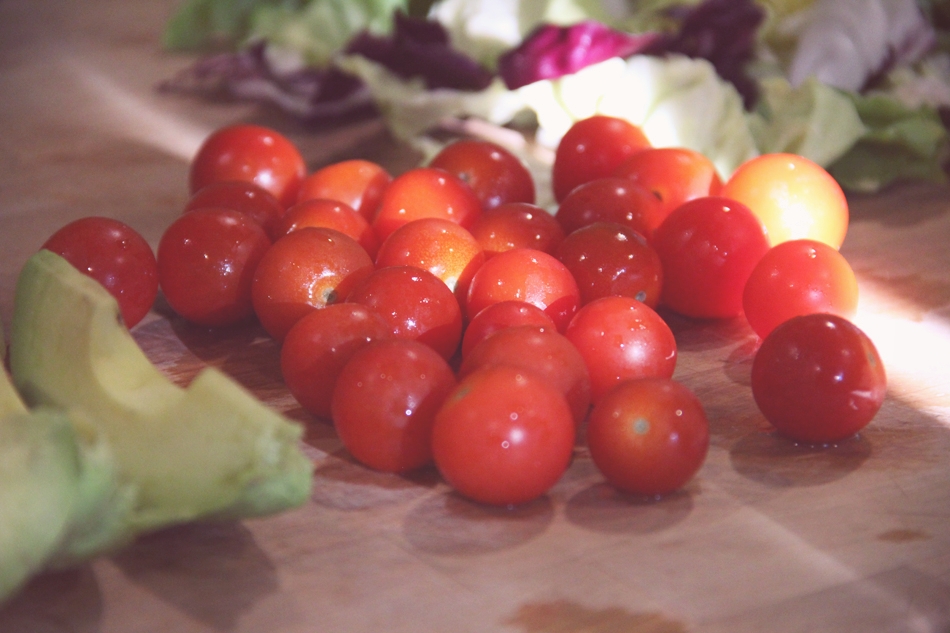
After the last post in my Whole Foods series, I received a few questions about why I emphasize the word “raw” in some of my recipes. It’s a really great question and something that I’ve been meaning to write about.

Simply put: eating raw foods is important. When food is cooked above 118 degrees Fahrenheit for three minutes or longer, its protein becomes coagulated, its sugar becomes caramelized, and its natural fibers are broken down. This means that it takes longer to move through the intestinal tract. Additionally, 30% to 50% of its vitamins and minerals have been destroyed and 100% of its enzymes have been destroyed. As a result, cooked food depletes our body’s enzyme potential and drains the energy we need to maintain and repair our tissues and organ systems.
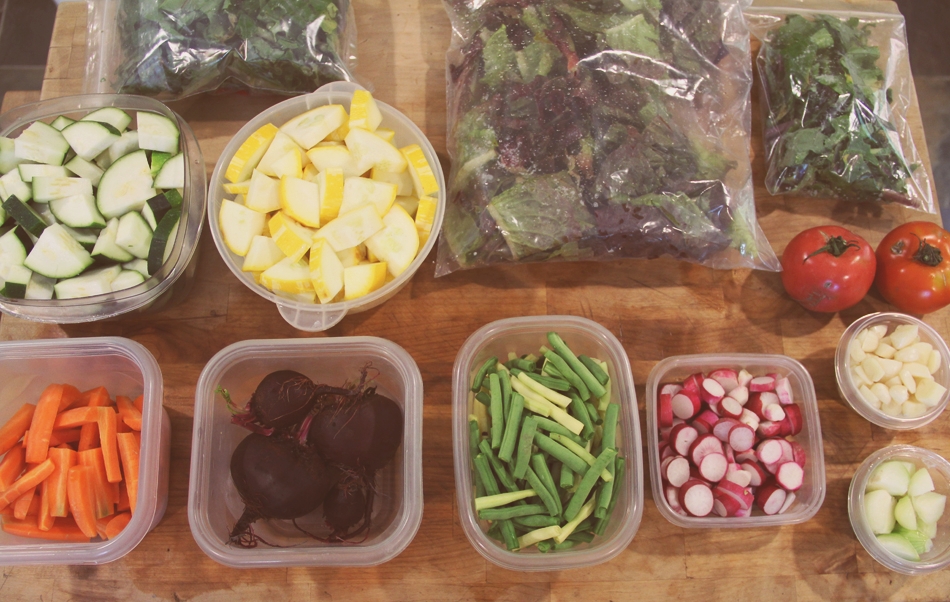
There are lots of benefits to eating raw foods. Most raw foods are low in calories, fat, and sodium, and high in fiber (great for digestion!). Raw foods diets work for weight loss. You also get nutritional benefits from eating raw. Most of what you eat will be high in vitamins, minerals, fiber, and phytochemicals.

Everyone knows that eating lots of veggies and fruits is good for you, but there is more to it than eating a small salad with dinner. I like to pack as much raw food into my diet as possible. That’s why I put raw kale, spinach, fruit, and nuts into my smoothies. Most of the packaged nuts that you find in the grocery store are roasted and salted. If you look a bit, you can usually find the good, raw nuts near the trail mix section.

Other benefits to eating raw include:

  • Increased energy.
  • Better sleep and less sleep needed.
  • Increased mental clarity.
  • Eat as much as you want (of raw food only!). That one isn’t really a health benefit, but you don’t get that uncomfortable full feeling eating raw that you do when eating cooked food.

There are raw foodists out there who eat 100% raw food diets. Many of these people are extremely healthy and some have used a raw food diet to overcome disease and mental illness. It’s pretty incredible to read their stories. As for me, I don’t aim to eat a 100% raw food diet. If I’m being honest, I just love cooked too much. I wouldn’t even want to imagine a life where I never ate a fresh-baked cookie or a hot slice of pizza again. However, I also realize how important incorporating raw food into my diet really is. That’s why I aim to eat at least 50% raw every day. I don’t reach that goal every day, but most days I come close. Keeping that “50%” goal in mind plays a positive role in my daily food choices.

I hope that answers the questions that I received about raw food. If you have any other questions about whole foods, raw food, etc. — fire away! I am not an expert but I’ve done a lot of research in this area and I have a lot of knowledgeable friends. I also want to highly recommend the documentary, Foodmatters. It was the first film that really opened my eyes to the importance of raw food and how much our diet truly impacts our overall health. I’ve watched it several times. (It’s also available on Netflix streaming.) It’s a must-see.

Wishing you happiness & good health! xo

you may also like

  • · · ·

    Tired of Conflict Bringing You Down?

    Dealing With Conflict

    Conflict takes many forms—misunderstanding, frustration, ignorance, hatred, envy, and so on—but despite the cause, the result is largely the same: someone walks away with hurt feelings.

    The truth is, however, that this is not necessary. You can choose to be unaffected by conflict. It is not an easy thing to accomplish. You have, after all, lived your life believing that conflict equals pain. But with practice & patience you can learn to live above conflict in a place of true peace.

    “True peace can not be disturbed by gain or loss.”

    The reason that conflict hurts us is because we allow it to. Most pain comes from another person(s) or from our own minds. The key to being unaffected by conflict is to understand that anything that another person says to us (out of anger, frustration, etc.) is actually a reflection of her feelings about herself and is rooted in fear. Likewise, anything that our mind says to us (self-criticism, self-hatred, etc.) is also rooted in fear. All forms of discomfort—sadness, anxiety, worry, rage, hatred, envy, and so on—are rooted in fear.

    When you accept that angry words are actually reflections of fear, it makes them much less painful to tolerate. Even the angriest and most cruel of arguments is based in fear & insecurity.

    For example, you have a large project due at work. You bring it into your boss’s office an hour prior to the deadline. She notices that it is riddled with errors. Her face turns red and she begins to scream. “You idiot! How could you be so stupid? This is unacceptable. I can not believe I ever hired you. Get out!”

    On one hand, you are devastated. Her words have stung you at your core. You are insulted, sad, angry, afraid. But if you really stop to analyze the situation, why do you think she acted this way? Most likely, she is afraid. Most likely, she is terrified about the way that your “failure” is going to reflect on her. After all, wasn’t it her who hired you, gave you this assignment, failed to give you proper instruction, and so on? What will her boss think when she turns this project into him? Her explosion was based in fear.

    Another example, it is Saturday afternoon and you are sitting on the couch. Your husband comes in the door and notices that you have not swept the floors. He begins to speak angrily, “Haven’t you swept the floors? Didn’t you see this dirt? You’ve been so lazy recently.” You are crushed and devastated. How could he be so mean? But then again, you stop and analyze. The lawn is not mowed, the gutters are uncleaned, there are piles of crap strewn about the yard. Your husband is insecure about all of his unfinished chores and is projecting his self-frustration onto you. His remarks were based in fear and insecurity.

    If you take the time to truly analyze, you will find that almost every conflict is rooted in fear. Therefore, the vast majority of hurtful things that are ever said to you actually have absolutely nothing to do with you. This is an incredibly liberating concept (not to be confused with the rare scenario when you are actually wrong by the way). Still, just because the other person’s (or even your own self-inflicted) anger is based in fear, that still doesn’t make it right. Yes, perhaps both your boss and your husband were entirely out of line. It is alright for you to tell them so, but what is more important is the way that you process the conflict within yourself.

    Most people internalize the conflict. In any case, you take what was said and push it deep within yourself. Perhaps you believe the other person words. “Yes, I am lazy, stupid, ugly, etc.” The conflict turns into emotional pain and festers within you eventually becoming depression, anxiety, and so on. But as I mentioned at the start, none of that is necessary.

    You must accept the conflict (words) for what they are—someone else’s (or even your own mind’s) fears and insecurities. Fear is nothing to be afraid of or affected by. Most fear is completely unnecessary (read more about that).

    After the conflict, words, and judgments have passed, simply allow all of it to pass through and around you like water or air. Understand that it is something outside of you, that has nothing to do with you at all. It is not inside of you, it did not come from you, and you do not have to absorb it. Simply let it pass and then move on.

    Holding onto the pain of conflict is insane and unnatural. What do the birds do after the great storm has passed? They sing, of course! You will never hear the birds singing so sweetly and so loudly as they do after the storm has passed and the sun shines again. They do not mourn the broken nest, the wet feathers, or the lost supper. They simply sing and praise the light in gratitude. They rejoice that the sun has come again.

    In his book, The Power of Now: A Guide to Spiritual Enlightenment, Eckhart Tolle talks about his observation of duck fights. Two ducks approach one another. They squawk in anger for mere seconds. Then they turn away from one another, flap their great wings a few times, and swim on as if it never happened. This is true wisdom, true peace, in action. There is so much that we can learn from this simple observation.

    There is really no need to hold onto anger or discomfort. There is really no need to suffer. In life, you will find many reason to suffer. But a good reason to suffer, you will never find. Let conflicts pass through and around you. Do not hold onto them. You will almost always find that it never has anything to do with you anyway.

3 Comments

    1. Thanks, Crista. I’m so excited to be starting off 2014 right. I’ve got my eye on the prize: fitting into my pre-prego jeans! Sharing here really helps keep me accountable. Maybe one day I’ll be brave enough to post my before & progress pix….

Leave a Reply

Your email address will not be published. Required fields are marked *