Hakuna Matata: Part One
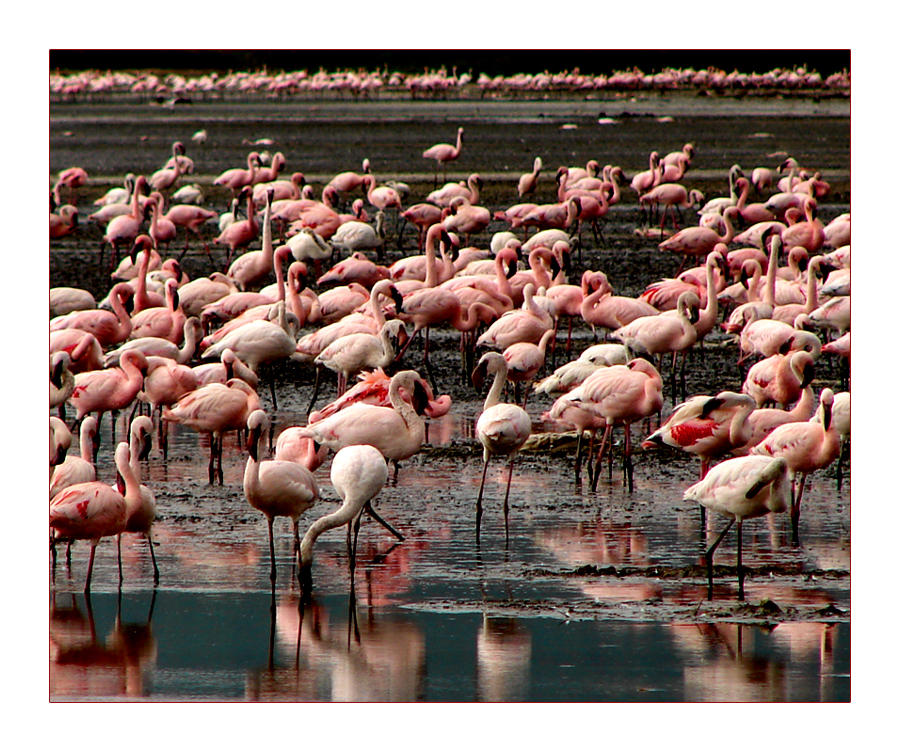
The Adventure Begins
I was taking a required elective, World Geography, during my senior year of college. If it hadn’t been for that elective, I would have never been in the Science Building at all. (I was an English Major with a Creative Writing focus.) But for whatever reason, I was there in the Science Building and one morning while walking to class, I noticed a flier on the wall: “Kenya Study Abroad Program, Summer 2006.”
It was March.
I was sold.
When I told my friends and family that I was going to Africa, their reactions ranged from confusion to fear. When I told them that I had a layover in Dubai, they were panic-stricken. I grew up in a small suburb in Northern New Jersey where most of the population is WASPs (White Anglo Saxon Protestants). The idea of going to Africa, let alone having a layover in the Middle East, is completely terrifying to most of these people. My closest friends and family tried desperately to talk me out of it.
Of course that only made me want to go more. Yes, I’m one of those. I had to prove that not only was it completely safe to travel to these places; but it was also completely necessary and wonderful. I had to teach them that there is a great, big, beautiful world outside of the little box that they were living in. (Yes, believe it or not, there is life beyond New York City.)
Lesson 1: Do not listen to a damned thing that anyone tells you out of ignorance. Learn for yourself. Change your perspective (and theirs).
I spent the next few months thinking about my trip obsessively. I could not wait. I was beyond excited. I had been waiting for an opportunity like this my entire life: a chance to experience another culture and world. (I’d been to England & Wales but it wasn’t quite the adventure I’d been seeking.)
Finally, after months of anticipation, July approached. One day I was at work, sitting at my desk, watching the clock as usual, when suddenly I became dizzy. I almost fell off my chair. Minutes went by and it didn’t go away. In fact, it got worse. I tried to get up but I couldn’t stand. I asked a co-worker to help me to the restroom. I splashed cold water on my face, drank water, and ate crackers. I did all of the things that you’re supposed to do when you’re dizzy. But it only got worse.
A friend drove me home that day. I went to sleep early. I woke up and the dizziness was still there. The constant, spinning vertigo was making me nauseous. My mother took me to the emergency room.
This was two weeks before Africa. My Africa.
When I got to the hospital they took some tests and hooked me up to an IV. After an hour of waiting, a doctor came into my room.
“You have a condition called Labyrinthitis,” he said.
Now I’ll be damned if I had a clue what that meant. It sounded like a low-budget 80’s movie to me. I only cared about one thing. “How long will it last?” I asked.
“It could be 6 days. It could be 6 years,” he said.
That was one of the scariest moments of my life. Later I learned that labyrinthitis is an inflammation of the inner ear. The inflammation affects the balance part of the brain and causes vertigo. In all likelihood, it was the meningitis vaccine I’d had a week prior as a part of my travel vaccinations. I spent the next few days in bed, devastated and terrified. After several days laid up, I slowly began to walk again with the help of a cane.
There I was, two weeks before my Africa, crippled. Some friends forced me out of the house and to the movies. Even with my cane, I fell several times. They had to carry me to the car.
Still, I practiced walking with my cane every day. Eventually, I was on the move, with a cane, but on the move. I had expressed my fears about my condition to the trip’s director.
“You have to come,” she said. The next day I found her son (who I’d never met before) at my doorstep, telling me that I absolutely had to come. He told me that he would be on the trip too and would take care of me no matter what. The kindness of strangers.
I went to the doctors a few more times that week. I finally asked the big question, could I physically go on the trip. He advised me that the decision was mine to make, physically I would make it, but I had to do what I thought was best.
Could I go to Africa with a cane? With a dizzy head?
I didn’t make my decision until the night before my departure. I was torn between fear and bravery. In the end bravery won out. One of the students I would be traveling with lived near me and we decided to drive to the airport together. I arrived at her house early that morning. Her father drove us to the airport (JFK in New York City) through rush hour traffic in his white plumbing van. When we arrived, we exited the van and made our way into the airport. I watched the white van disappear into the vast sea of traffic as he drove away. We lugged our bags inside and sat down to wait for the rest of our group.
It wasn’t until later, after we’d gotten through security, that it hit me: I had forgotten my cane.
Lesson 2: Sometimes the odds are going to be hell-bent stacked against you. The Universe is going to throw every obstacle in your path that it can muster. Do not be deterred. Pushing forward will lead you to the most rewarding, incredible experiences of your life.
This is Part 1 of a 4-part series about my trip to Kenya, Africa. Read Part 2 here. ♥



WOW, now you have me going big time!! Such adventure awaits, will be checking early for the next installment.
What a terrifying thing to happen to you as far as the Vertigo is concerned, I guess we never know exactly how our bodies will react to vaccinations.
Love your perseverance, and your willingness to trust your own instincts and find out what life is all about on your own terms. You only get one go around, so it might as well be yours instead of someone else’s idea of who you are supposed to be.
So glad that you enjoyed the post, Lou! Not to worry, part two will be posted precisely at 7 am tomorrow morning. 🙂
It really was an awesome adventure–one of the greatest of my lifetime. The vertigo was terrifying and that fear stays with me (i,e, what is it comes back!?!?). But we can’t let those things stop us. My mother always said, “99% of the things that we worry about never come to fruition.” I try to remind myself of that truth often.
Dena, we have talked about this trip before and I loved reading more detail. I look forward to the next three installments 🙂
P.S. The vaccine you received wasn’t for mononucleosis (Epstein-Barr virus), it was for meningococcal meningitis which is endemic to many parts of the world.
So glad you are enjoying the series, Kristin. 🙂 Yes, you are right. That was a total typo. Just fixed it. How on earth did you know which vaccine I’d had to go to Kenya?? I got two others including yellow fever and maybe cholera… They also gave me something for malaria–daily pills throughout the trip if I remember correctly.
That experience has definitely changed the way that I feel about vaccines.
In reply to your question – (a) no vaccine for the Epstein-Barr virus exists, and (b) the meningococcal meningitis vaccine is required for travel to a number of places where it is endemic in the world, most notably anywhere in South America and Africa. Also, when working in the community, we get a lot of orders from travel clinics to supply them with vaccines (in some states, they can be administered by the pharmacist, too … in New York, only the flu vaccine can at this time.) There are lots of options for malaria prophylaxis, none of which are particularly pleasant, but getting malaria would be far worse, obviously.
On an unrelated note… I guess I am a little amused because in all of the pics I have seen from this trip, I never thought for a moment that you “should have” had a cane!
WOW! This was awesome. I really am much prouder of your courage now.
Thanks, love! xo