·

Exercising as a Family: Wellness for the Body & the Heart

In yesterday’s post I mentioned that it was a gray, February day, and well… today we had more of the same. The fog has been as thick as pea soup all day and a steady drizzle endlessly falls from the sky. It’s a little bit depressing after awhile–we’ve had so much rain this winter–but there is something beautiful in it too. The way the Canadian geese fly in their perfect V formations across the colorless sky; the way the barren tree branches look like spilled ink against the gray; the way the fog hides the hills and mountains in the distance. There is something magic hidden in this gloomy weather too.

Still with all of this rain and cold, we’ve been indoors way more than I would prefer lately. That’s why scheduling a weekly outdoor adventure is high on my list of intentions for 2020. No matter how nasty it is outside, I am making it a point to get outside with my little ones at least once a week. Fresh air and exercise is so important for our wellness. Staying active lowers our risk for disease, reduces our stress levels and vastly improves our emotional health, helping my kids do to better in school too.

Little ones won’t always decide to get active on their own. (My kids would happily spend the day on devices playing Pokemon Go and watching YouTube if I let them!) So sometimes I’ve got to get creative to get them outside and encourage them to stay active. As their mama, it’s my job to make them see that moving should be fun.

Several decades ago family time was easy to come by, but in today’s world of endless notifications and ever-present electronic devices, it can be so hard to come by. Even though spending time with family without distractions can be a challenge, it’s so important to me to carve out uninterrupted family time on a regular basis. Getting outside and moving is one of my favorite ways to do just that. Here are a few of our favorite outdoor activities to get you (and me) inspired on yet another gray, February day.


Hiking and Nature Walks
As they say, “When you have the right clothing, no weather is bad weather.” No matter the time of year, if you dress for it, getting outside for a walk, a hike, and some frsh air is balm for the soul. Walking let’s us stretch those cooped up muscles, and reconnect with nature, all while sharing stories about what’s going on in our lives. Using an app or a pedometer to track everyone’s steps, is a fun way to add extra challenge and distance to your family walks. One of the best things about hiking is that you don’t need much. Apart from a backpack for water bottles and spare jackets, you just need comfortable, weather-appropriate shoes. You can find useful reviews of workout shoes at the Walk Jog Run website, so you can easily get those that suit your needs perfectly.
Cycling
When you need a break from chores and the kids need to take a breather before finishing their homework, going for a family bike ride is a great option for everyone. You can bike to the local park or to the grocery store for some last-minute shopping. Cycling improves stamina, increases muscle strength and flexibility, boosts joint mobility and improves posture and coordination. Riding my bicycle is one of my favorite childhood memories and creating new memories with my babies means everything to me.

Gardening
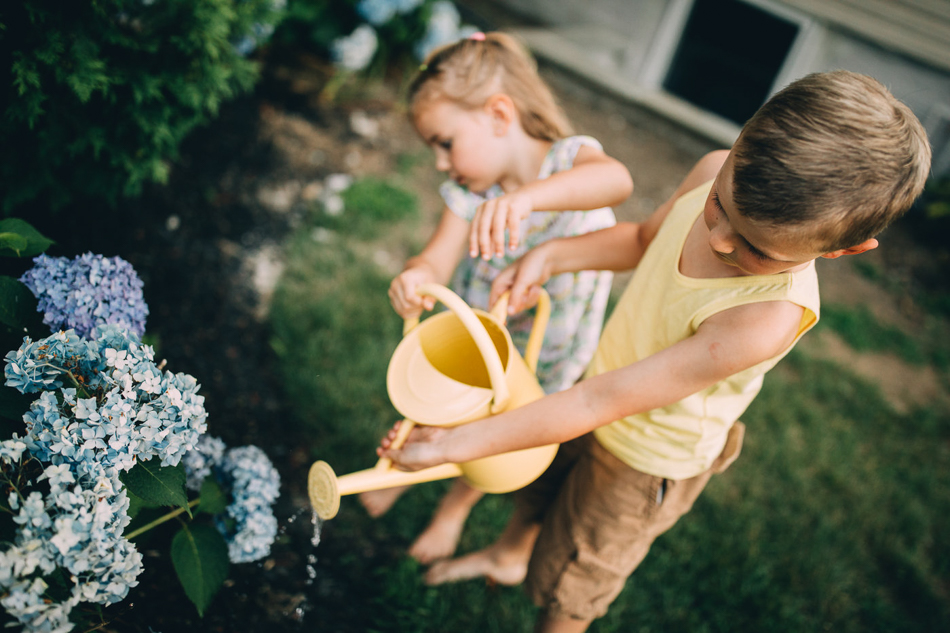
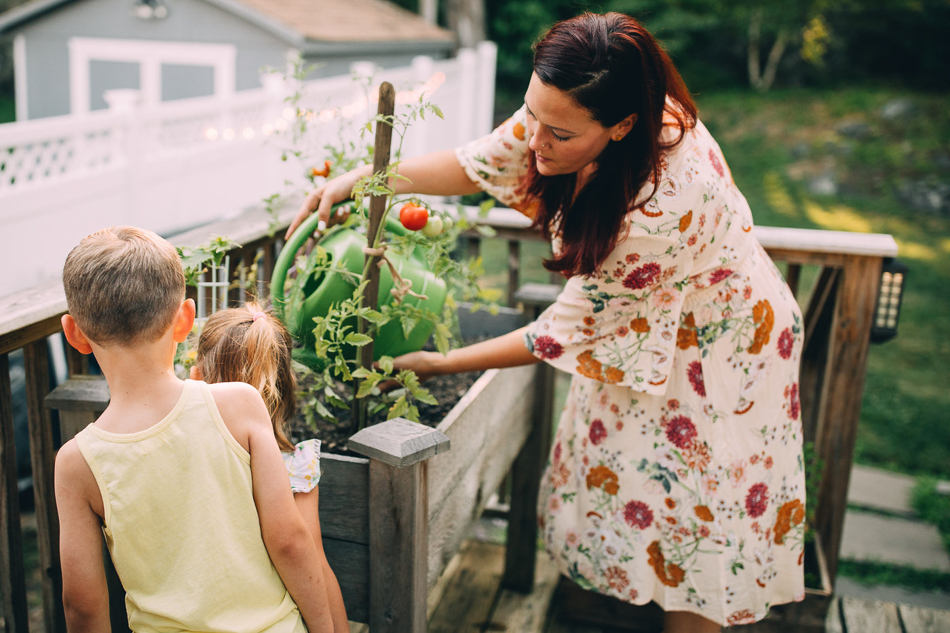
Everybody that knows our family knows that we love to garden. In addition to being a beautiful way to grow our own beautiful bounty, gardening gives all of the main muscle groups a great workout including legs, arms, stomach, neck, and back. In addition, since everyone gets their hands dirty, nobody is tempted to grab their phones. Double win.
Dancing
Everyone is always down for a dance party in this house. Sometimes we do them inside, sometimes we do them outside. Sometimes there’s music and sometimes we just dance to the rhythm in our hearts. Not only do my kids love to get silly while dancing, but they have a great time doing it while easily working up a sweat, too.


Exercising as a family will strengthen your family’s relationship, as well as your muscles–body and heart. I hope that you enjoyed the photographs in this post from a couple of summers back. Nothing like the gray of this day, but so heart-warming to see that golden sunshine behind us, reminds me that it’s just around the corner. xo


you may also like

  • · · ·

    Tired of Conflict Bringing You Down?

    Dealing With Conflict

    Conflict takes many forms—misunderstanding, frustration, ignorance, hatred, envy, and so on—but despite the cause, the result is largely the same: someone walks away with hurt feelings.

    The truth is, however, that this is not necessary. You can choose to be unaffected by conflict. It is not an easy thing to accomplish. You have, after all, lived your life believing that conflict equals pain. But with practice & patience you can learn to live above conflict in a place of true peace.

    “True peace can not be disturbed by gain or loss.”

    The reason that conflict hurts us is because we allow it to. Most pain comes from another person(s) or from our own minds. The key to being unaffected by conflict is to understand that anything that another person says to us (out of anger, frustration, etc.) is actually a reflection of her feelings about herself and is rooted in fear. Likewise, anything that our mind says to us (self-criticism, self-hatred, etc.) is also rooted in fear. All forms of discomfort—sadness, anxiety, worry, rage, hatred, envy, and so on—are rooted in fear.

    When you accept that angry words are actually reflections of fear, it makes them much less painful to tolerate. Even the angriest and most cruel of arguments is based in fear & insecurity.

    For example, you have a large project due at work. You bring it into your boss’s office an hour prior to the deadline. She notices that it is riddled with errors. Her face turns red and she begins to scream. “You idiot! How could you be so stupid? This is unacceptable. I can not believe I ever hired you. Get out!”

    On one hand, you are devastated. Her words have stung you at your core. You are insulted, sad, angry, afraid. But if you really stop to analyze the situation, why do you think she acted this way? Most likely, she is afraid. Most likely, she is terrified about the way that your “failure” is going to reflect on her. After all, wasn’t it her who hired you, gave you this assignment, failed to give you proper instruction, and so on? What will her boss think when she turns this project into him? Her explosion was based in fear.

    Another example, it is Saturday afternoon and you are sitting on the couch. Your husband comes in the door and notices that you have not swept the floors. He begins to speak angrily, “Haven’t you swept the floors? Didn’t you see this dirt? You’ve been so lazy recently.” You are crushed and devastated. How could he be so mean? But then again, you stop and analyze. The lawn is not mowed, the gutters are uncleaned, there are piles of crap strewn about the yard. Your husband is insecure about all of his unfinished chores and is projecting his self-frustration onto you. His remarks were based in fear and insecurity.

    If you take the time to truly analyze, you will find that almost every conflict is rooted in fear. Therefore, the vast majority of hurtful things that are ever said to you actually have absolutely nothing to do with you. This is an incredibly liberating concept (not to be confused with the rare scenario when you are actually wrong by the way). Still, just because the other person’s (or even your own self-inflicted) anger is based in fear, that still doesn’t make it right. Yes, perhaps both your boss and your husband were entirely out of line. It is alright for you to tell them so, but what is more important is the way that you process the conflict within yourself.

    Most people internalize the conflict. In any case, you take what was said and push it deep within yourself. Perhaps you believe the other person words. “Yes, I am lazy, stupid, ugly, etc.” The conflict turns into emotional pain and festers within you eventually becoming depression, anxiety, and so on. But as I mentioned at the start, none of that is necessary.

    You must accept the conflict (words) for what they are—someone else’s (or even your own mind’s) fears and insecurities. Fear is nothing to be afraid of or affected by. Most fear is completely unnecessary (read more about that).

    After the conflict, words, and judgments have passed, simply allow all of it to pass through and around you like water or air. Understand that it is something outside of you, that has nothing to do with you at all. It is not inside of you, it did not come from you, and you do not have to absorb it. Simply let it pass and then move on.

    Holding onto the pain of conflict is insane and unnatural. What do the birds do after the great storm has passed? They sing, of course! You will never hear the birds singing so sweetly and so loudly as they do after the storm has passed and the sun shines again. They do not mourn the broken nest, the wet feathers, or the lost supper. They simply sing and praise the light in gratitude. They rejoice that the sun has come again.

    In his book, The Power of Now: A Guide to Spiritual Enlightenment, Eckhart Tolle talks about his observation of duck fights. Two ducks approach one another. They squawk in anger for mere seconds. Then they turn away from one another, flap their great wings a few times, and swim on as if it never happened. This is true wisdom, true peace, in action. There is so much that we can learn from this simple observation.

    There is really no need to hold onto anger or discomfort. There is really no need to suffer. In life, you will find many reason to suffer. But a good reason to suffer, you will never find. Let conflicts pass through and around you. Do not hold onto them. You will almost always find that it never has anything to do with you anyway.

Leave a Reply

Your email address will not be published. Required fields are marked *