Whole Foods for Health
As someone who struggled with my weight for the first half of my life, it breaks my heart to see others going through that pain. I was overweight from the time I was twelve-years-old until I was about twenty-two. Then during both of my pregnancies, I suffered from prenatal depression that led to me gaining a bit too much weight during my pregnancies that I kept on for many years because I got trapped in a bad cycle.
All in all, there have been about ten total years of my life where weight was not a struggle for me. The blessing in these clear, separate phases of my life is that I know what works really well and what hurts. I could honestly write a book about physical wellness. I have read countless books, watched countless documentaries and studied every theory that I can get my hands on. But the truth is that it can all really be boiled down to a few simple things:
1. Good emotional/spiritual health is critical for good physical health.
2. A whole food diet is critical for good physical health.
3. Movement is critical for good physical and emotional/spiritual health.
And while these things are “simple” in theory, I realize that there is nothing simple about them in practice. So don’t be overwhelmed. Don’t feel like you are alone. And always, always start with something small and work your way up from there.
I won’t get into all three of these points today. For now, I will talk about the second point and explain what I mean by “a whole food diet” because I do believe that this is a wonderful place for anyone to begin. The more that I learn about nutrition and the more that I consider my own life experiences, the more passionate I become about the importance of whole foods.
If you’re not familiar, whole foods are foods that are unprocessed and unrefined, or processed and refined as little as possible, before being consumed. Meaning that they are taken from the earth and cooked or eaten raw with little or no intervention–nothing added, nothing taken away, nothing chemically altered.
Whole foods typically do not contain any additives. Examples of whole foods include unpolished grains, beans, fruits, vegetables and non-homogenized dairy products. Originally (and naturally) all food is whole food. The term whole foods is often confused with organic food, but whole foods are not necessarily organic, nor are organic foods necessarily whole.
Whole foods are important because a lot of the food on the market today–especially in the United States–is processed with dangerous chemicals, preservatives, salts, artificial sweeteners, and so on. While these artificial substances may taste “good” and may make food cheaper, they are toxic. They cause cancer, obesity, heart disease, and diabetes, just to name a few.
It is naive to believe that the government is protecting us from toxic food. The U.S. is far behind the curve when it comes to food safety and nutrition. The U.S. government allows for a whole variety of dangerous foods to be sold that are actually banned in other countries. Therefore it is our responsibility to take matters into our own hands and make educated decisions about what we eat and what we feed our families.
If there is any one thing that I would recommend to a person looking to improve their health it is this, stick to whole foods and add more fresh produce into your diet. I would also highly encourage you to move toward plant-based, but we’ll save that conversation for another day.
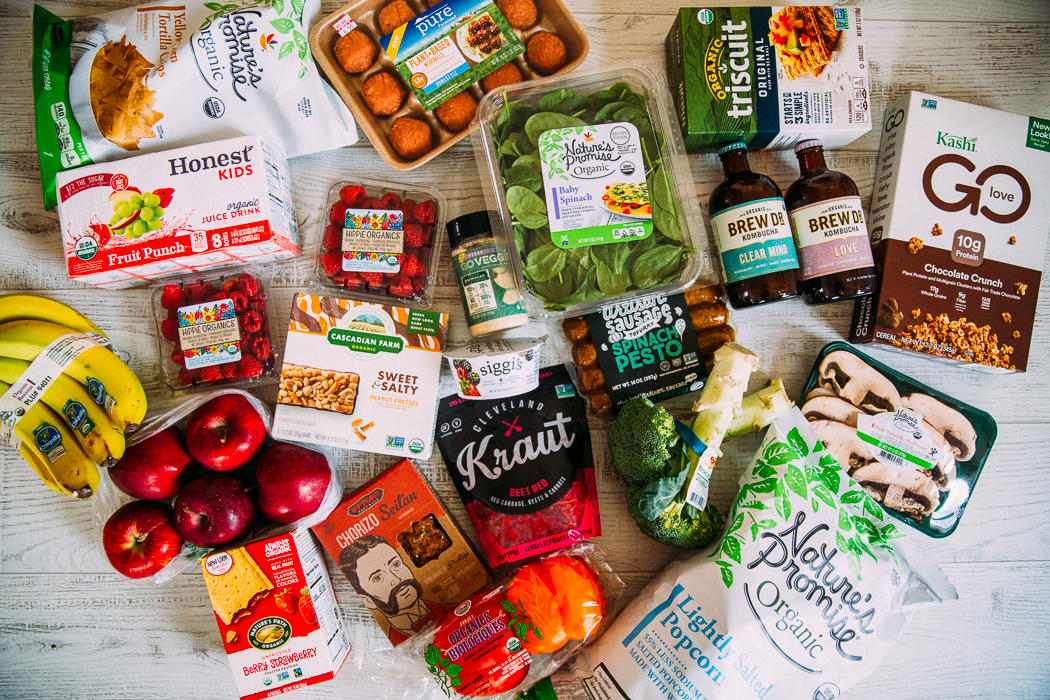
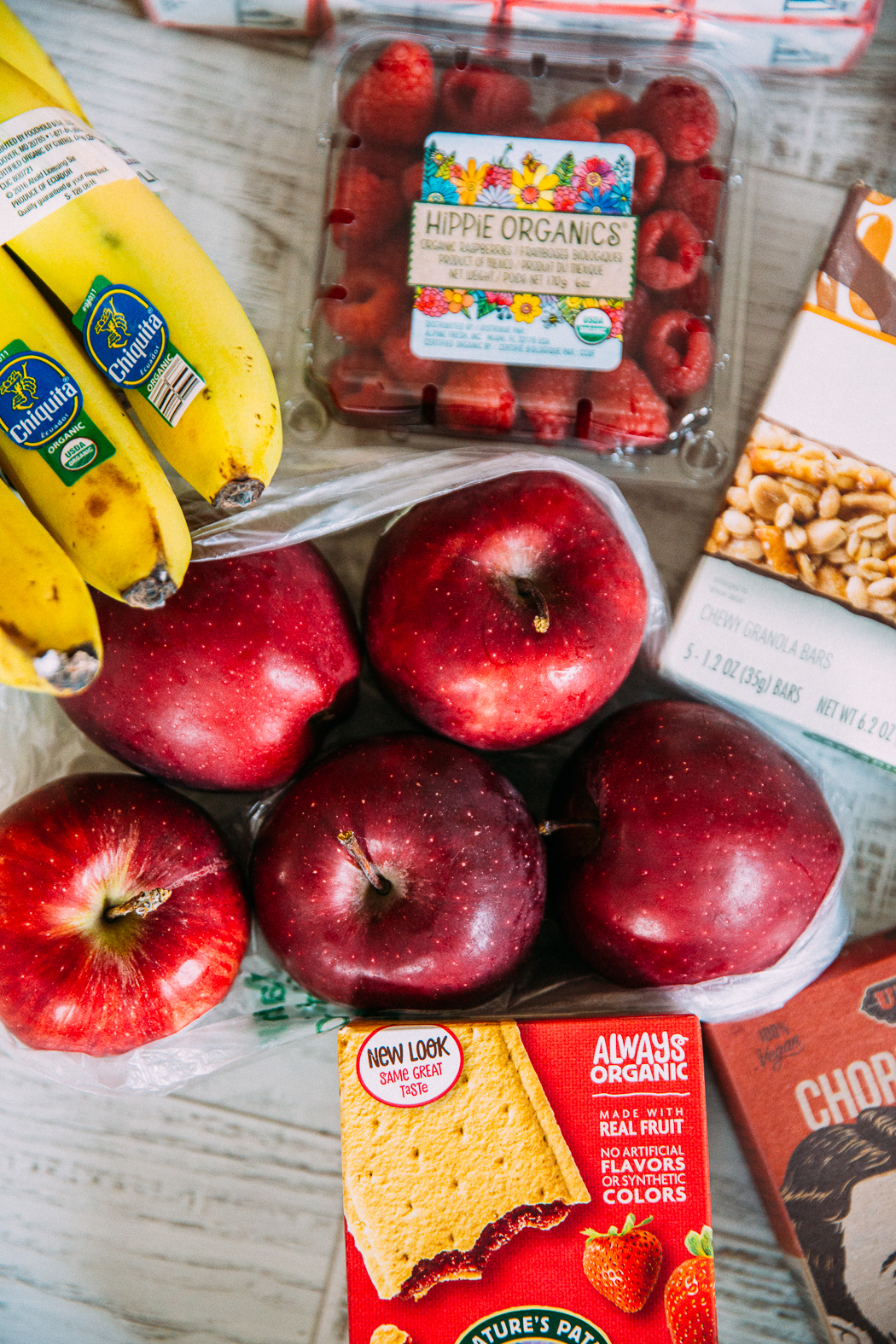
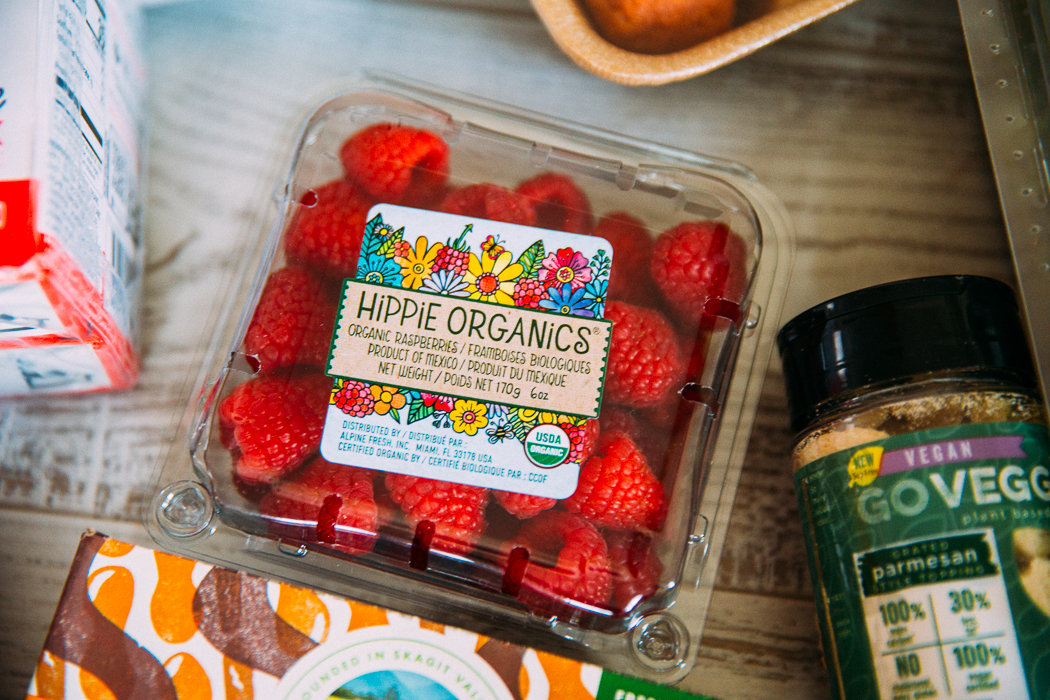
P.S. This is not a sponsored post. I just decided to take a few snaps of our groceries the other day because I’ve been really conscious of shopping for organic, plant-based options lately. I also aim for a lot of whole foods, although as you can see from my grocery haul, it’s not perfect. Processed food (like cereal, crackers, granola bars, etc) are super convenient. My kids are really great about eating fresh fruit and vegetables because they’ve been eating it their whole lives, but when it comes to things like school lunches, I opt for organic versions of their favorites because I don’t want things to end up in the garbage. It’s a work in progress forever. 😉
Oh, and one more thing while we’re on the topic of groceries, check out this post that I made about earth-friendly grocery shopping.

 . On the return flight, I finished it. It was my introduction to Seth Godin—no idea why I hadn’t found him sooner!—and what an introduction it was. The book blew me away. It is the best book on leadership and change management that I’ve ever read. While the content is sure to inspire change of the greatest sort within any organization—from business to church, non-profit to learning institution—it is also of incredible value to individuals.
 generation.